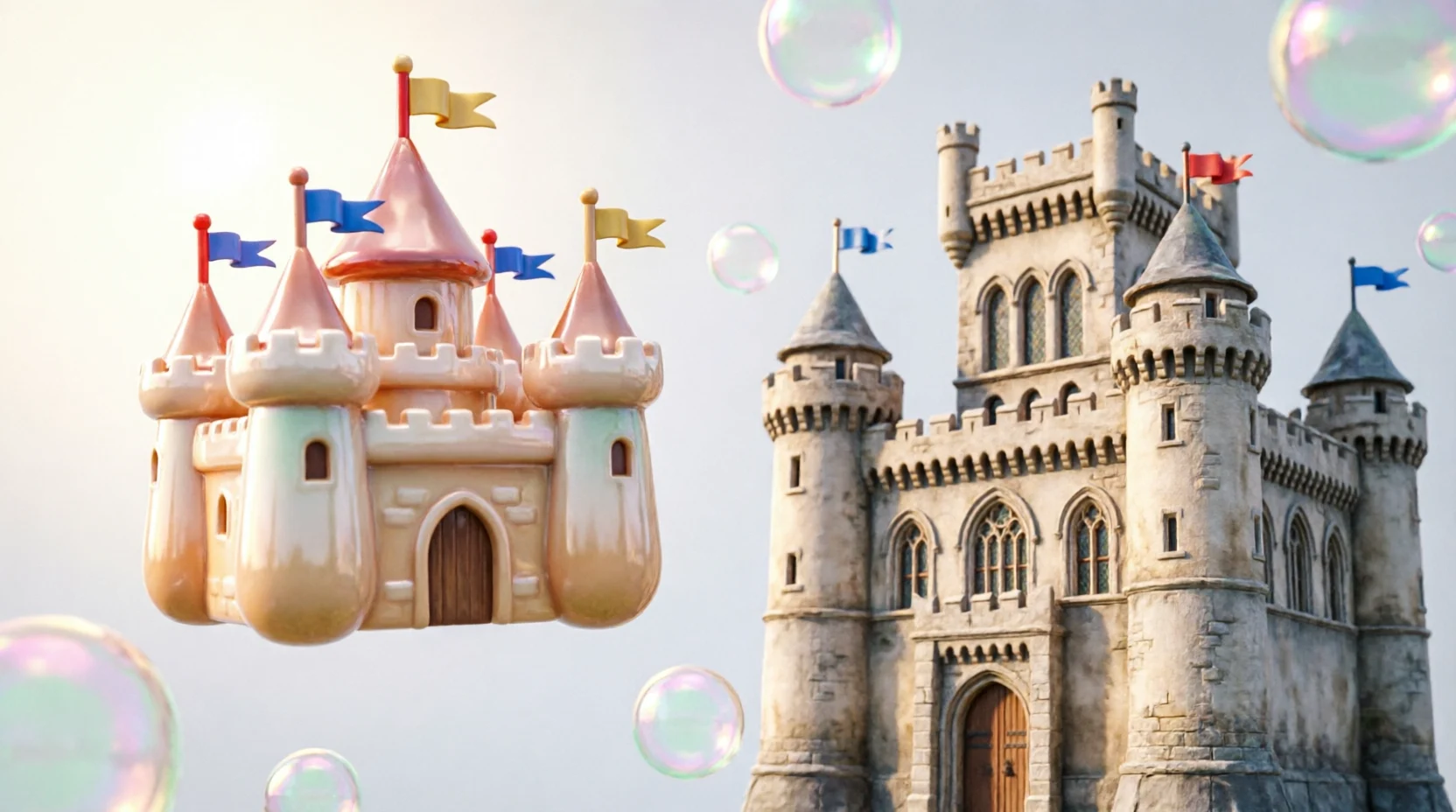
Quick Answer: 🏰 The Castle Emoji represents a castle, fortress, royalty, fantasy, history, or a grand and magical place. It can also be used when talking about medieval themes, fairy tales, or impressive architecture.
The castle emoji can also add a regal or elegant touch to social media posts. Whether you’re describing a real castle, sharing a dreamy travel moment, or talking about a fictional kingdom, 🏰 is a simple way to bring a magical and majestic vibe to your message.
The castle emoji 🏰 usually represents a castle, palace-like building, medieval history, fantasy, or a European landmark. In texts and social media, people may use it literally when talking about castles, travel, architecture, or historic places. It can also create a fairy-tale, royal, magical, or storybook mood when the conversation is more playful. The exact meaning depends on the surrounding message. Unicode identifies 🏰 as U+1F3F0, with the CLDR short name “castle”; Unicode’s character name identifies it as “EUROPEAN CASTLE.”
What Does 🏰 Mean?
🏰 means “castle” and is commonly used for castles, medieval places, European architecture, travel, royalty, fantasy, and fairy-tale themes.
Depending on the message, it can suggest:
- A real castle or historic site
- A royal or luxurious setting
- A fairy tale or fantasy world
- Medieval history
- Magic, adventure, or storytelling
- A playful “dream castle” idea
It does not have one fixed emotional meaning. A message such as “Visiting the castle today 🏰” is literal, while “Living my princess era 🏰👑” gives it a more playful or fantasy-related meaning.
What Does the Castle Emoji 🏰 Usually Mean?
The most direct meaning of 🏰 is simply a castle. Its design depicts a European-style castle, making it useful when someone is talking about historic buildings, landmarks, architecture, or travel. Emojipedia describes it as a castle in a style found in France and other parts of Europe.
In everyday messages, however, people can use the emoji more broadly. It may represent the atmosphere associated with a castle rather than an actual building.
For example, 🏰 can add a sense of:
- Royalty: “Queen for the day 👑🏰”
- Fantasy: “Off to a magical world 🏰✨”
- History: “Exploring an old castle today 🏰”
- Adventure: “Our next stop looks incredible 🏰🗺️”
- Luxury: “This hotel feels like a castle 🏰”
- Fairy tales: “A perfect storybook ending 🏰💫”
The surrounding words usually make the intended meaning clear.
Castle Emoji Meaning in Text
In a text message, 🏰 is often used as a visual reference to a castle, historic location, royal setting, or fantasy scene.
For example:
“We finally made it to the castle 🏰”
Here, the meaning is straightforward: the sender is referring to an actual castle.
But consider:
“I need my own castle after this week 🏰😂”
The emoji is no longer necessarily about a real building. It adds a humorous idea of wanting a huge, comfortable, almost royal place to escape to.
Another example:
“Once upon a time… 🏰✨”
This combination creates a fairy-tale atmosphere.
So when interpreting 🏰 in a text, look at the words around it, other emojis, and the overall topic rather than assuming it has a hidden meaning.
When Is 🏰 Used Literally?
The castle emoji works especially well when the subject is an actual place or historical site.
Someone might use it while talking about:
- A castle they visited
- European travel
- Medieval architecture
- Historic landmarks
- Museums or heritage sites
- A vacation destination
- A castle shown in a photo
- A historical story or event
For example:
“The castle was even more beautiful in person 🏰”
Here, 🏰 simply reinforces the subject of the sentence.
It can also appear in travel captions:
“Exploring old European streets and castles 🏰🌍”
In this setting, there is no need to search for a deeper emotional meaning.
What Does 🏰 Mean in Fantasy and Fairy-Tale Messages?
Outside literal conversations, 🏰 often fits fantasy, fairy tales, magical stories, and imaginary worlds.
It pairs naturally with emojis such as ✨, 🪄, 🧙, 🧚, 👑, 🐉, and 🐲 when someone wants to create a magical or storybook mood.
For example:
“Entering a whole new world 🏰✨”
The castle helps establish a fantasy setting.
Similarly:
“Once upon a time 🏰👑”
suggests a fairy tale or royal story rather than a real location.
This use is generally playful. The emoji itself does not prove that someone is referring to a specific fictional story.
Does 🏰 Mean Royalty?
It can suggest royalty, but royalty is a contextual interpretation rather than the emoji’s official definition.
Castles are strongly associated with kings, queens, princes, princesses, and royal settings, so 🏰 can help create that idea.
For example:
“Feeling like royalty today 👑🏰”
The 👑 makes the royal meaning much clearer.
By itself, 🏰 usually means a castle or castle-like setting. Adding 👑 can shift the message toward royalty, status, or a regal atmosphere.
Can 🏰 Be Romantic or Flirty?
The castle emoji is not inherently romantic or flirty.
Someone might use it in a romantic message because castles are associated with fairy tales, princesses, weddings, or dreamy settings. For example:
“A fairy-tale date would be pretty nice 🏰✨”
In that sentence, the romantic tone comes mainly from the words and situation.
A message like:
“Look at this castle 🏰”
does not automatically suggest flirting.
The same principle applies when someone sends 🏰 by itself. Without additional context, it is safer to interpret it as a castle, fantasy, travel, or royal reference rather than assuming romantic interest.
Can 🏰 Be Funny or Sarcastic?
Yes. The castle emoji can be used humorously when the literal image is exaggerated compared with the situation.
For example:
“My bedroom after I clean it for five minutes 🏰😂”
The joke comes from pretending the room has become a grand castle.
Another example:
“My snack stash is safely protected 🏰🍫”
Here, the castle represents exaggerated protection or importance.
The emoji itself is not automatically sarcastic. The surrounding sentence creates the joke.
Castle Emoji Examples and What They Mean
| Message | Likely Meaning | Why the Context Matters |
|---|---|---|
| “We visited an amazing castle today 🏰” | A real castle | The message directly describes a location. |
| “I want to live in a castle 🏰” | Dreaming about a grand home | The emoji reinforces the idea of luxury or fantasy. |
| “Once upon a time 🏰✨” | Fairy-tale mood | The wording and sparkles create a storybook feeling. |
| “This place looks royal 🏰👑” | Royal or luxurious setting | The crown makes the royal reference clearer. |
| “My room is basically a castle now 😂🏰” | Humor or exaggeration | The castle is being used playfully rather than literally. |
| “Our next adventure 🏰🗺️” | Travel or exploration | The map suggests a destination or journey. |
These examples are illustrations of possible interpretations, not fixed rules for how every person uses the emoji.
Emojis Similar to the Castle Emoji
Several place, fantasy, and architecture emojis can appear in similar conversations, but they do not all represent the same thing.
| Emoji | Official Name | Common Meaning | Tone | Where or When It Is Used |
|---|---|---|---|---|
| 🏰 | Castle | Castle, European architecture, fantasy | Grand, magical, historical | Travel, history, fairy tales, fantasy |
| 🏯 | Japanese Castle | Traditional Japanese castle | Historical, cultural | Japan-related places, history, travel |
| 👑 | Crown | Royalty, status, winning | Regal, celebratory | Royal themes, achievements, playful captions |
| 🏛️ | Classical Building | Classical architecture or government-style building | Formal, historical | Architecture, history, institutions |
| 🗼 | Tokyo Tower | Tokyo landmark | Travel, urban | Japan, tourism, city references |
| 🗽 | Statue of Liberty | New York and U.S. landmark | Patriotic, travel-related | New York, U.S. travel, landmarks |
| 🧙 | Mage | Magic, wizardry, fantasy | Playful, mysterious | Fantasy, games, magical stories |
| 🐉 | Dragon | Fantasy creature, mythical power | Dramatic, adventurous | Fantasy stories, games, legends |
The most important comparison is between 🏰 and 🏯. Both depict castles, but 🏰 represents the European-style castle while 🏯 specifically represents a Japanese castle. Unicode lists them separately as U+1F3F0 and U+1F3EF.
The 👑 crown is different because it represents an object associated with royalty rather than a building. Meanwhile, 🏛️ classical building focuses on classical architecture and does not specifically represent a castle.
🏰 vs. 🏯: What’s the Difference?
The distinction between 🏰 and 🏯 is mainly architectural and cultural.
🏰 Castle represents a European-style castle. Unicode’s character documentation identifies U+1F3F0 as EUROPEAN CASTLE, while the current CLDR short name is simply “castle.”
🏯 Japanese Castle represents a traditional Japanese castle, generally associated with Japanese architecture and history.
So:
- Use 🏰 for European or Western-style castles.
- Use 🏯 for Japanese castles.
- Use 👑 when the main idea is royalty rather than a building.
- Use 🏛️ when discussing classical architecture or a formal historic building.
Choosing the more specific emoji can make a travel caption or historical message clearer.
What Does 🏰 Mean From Someone?
If someone sends you 🏰, the meaning depends heavily on what you were discussing.
Possible interpretations include:
- They are talking about a castle.
- They are referring to a travel destination.
- They are creating a fantasy or fairy-tale mood.
- They are joking about luxury or living like royalty.
- They are reacting to a photo or story involving an impressive building.
For example, if you send someone a photo from a European vacation and they reply “Wow 🏰,” they are probably reacting to the castle or the setting.
If someone sends:
“You deserve a castle 🏰”
the emoji can make the message feel more playful, complimentary, or luxurious. Still, the words carry most of the meaning.
Does 🏰 Mean “Princess”?
Not by itself.
A castle can be associated with princesses and fairy tales, but 🏰 officially represents a castle rather than a princess. Unicode has separate emojis for people and objects connected with royal themes.
For example:
- 🏰 = castle
- 👸 = princess
- 🤴 = prince
- 👑 = crown
Using several together can create a clear royal or fairy-tale theme:
“Fairy-tale vibes 👸🏰✨”
The combination is more specific than 🏰 alone.
How to Respond to the Castle Emoji
Your response can follow the topic of the conversation.
If They Mean a Real Castle
You could reply:
“That place looks amazing! 🏰”
If They Are Talking About Travel
Try:
“That would be such a cool place to visit!”
If They Are Being Playful
A light response could be:
“Okay, your royal highness 😂👑”
If You Are Not Sure What They Mean
The simplest option is to ask:
“Wait, what does the castle mean? 😂”
There is no need to assign a romantic or hidden meaning when the context is unclear.
Castle Emoji Copy and Paste
Here it is:
🏰
You can copy and paste the castle emoji into texts, captions, comments, profiles, or notes.
Official Castle Emoji Details
The emoji is 🏰, Unicode code point U+1F3F0. Unicode’s current emoji data lists its CLDR short name as “castle,” while Unicode’s character names list identifies it as EUROPEAN CASTLE.
The emoji was approved in Unicode 6.0 in 2010 and later included in Emoji 1.0 in 2015, according to Emojipedia.
Its appearance can vary somewhat between platforms because Apple, Google, Samsung, and other vendors create their own artwork. The basic concept remains a European-style castle.
It is also different from the older Unicode character ⛫, which is a separate castle symbol and is not the same emoji character as 🏰. Unicode maps ⛫ to the European castle emoji concept but treats the characters separately.
Common Questions About 🏰
What does 🏰 mean in texting?
🏰 usually means a castle, but it can also suggest travel, medieval history, royalty, fantasy, fairy tales, or a grand setting depending on the message.
Is 🏰 a romantic emoji?
Not inherently. It can appear in romantic or fairy-tale messages, but the surrounding words and conversation determine whether the message is romantic.
What is the difference between 🏰 and 🏯?
🏰 represents a European-style castle, while 🏯 represents a Japanese castle. Unicode lists them as separate emoji characters.
Does 🏰 mean royalty?
It can suggest royalty because castles are associated with kings, queens, princes, and princesses. However, the emoji itself represents a castle rather than royalty.
Can 🏰 mean fantasy?
Yes. It is often a natural choice for fairy-tale, magical, medieval, and fantasy-themed messages, especially when combined with emojis such as ✨, 🪄, 🧙, or 🐉.
Does 🏰 mean “princess”?
No. 🏰 represents a castle. 👸 is the princess emoji. They can be combined when someone wants to create a princess or fairy-tale theme.
Can the castle emoji be sarcastic?
Yes, when the surrounding message makes the use exaggerated or humorous. The emoji itself does not have a fixed sarcastic meaning.
What does 🏰 mean on social media?
On social media, 🏰 can accompany posts about castles, travel, architecture, history, fantasy, fairy tales, or royal themes. Its meaning depends on the caption and other visual or textual context.
Final Takeaway
The castle emoji 🏰 is a flexible symbol for castles, European architecture, history, travel, fantasy, fairy tales, and royal-style imagery. Its meaning becomes more specific when paired with words or other emojis. If you are unsure what someone means by 🏰, focus on the conversation around it rather than assuming that it signals romance, flirting, or another hidden message.

Olivia Brown is a content writer at EmojissLife.com, where she creates fun, engaging, and easy-to-read emoji guides, meanings and collections. She enjoys turning everyday expressions into creative content that helps readers find the perfect emoji for every moment.