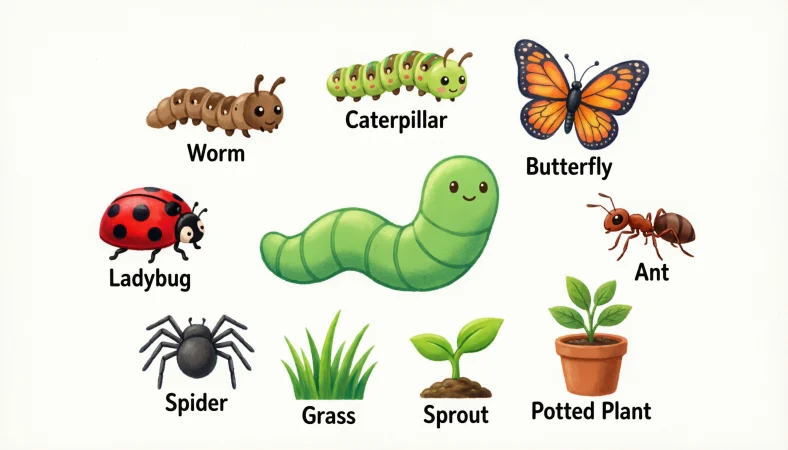
The 🪱 worm emoji most commonly means a real worm or earthworm. It can also be used playfully to represent wriggling, gardening, fishing, compost, or someone acting goofy. By itself, it does not have one fixed emotional meaning.
Have you ever received a 🪱 in a text and wondered what the sender actually meant? The worm emoji can look simple, but its meaning often depends on the conversation, tone, and relationship between the people using it. If you are searching for the 🪱 meaning, you may be surprised to learn that this emoji can be used in different ways, from talking about nature and gardening to making a funny, random, or playful comment. You may also be looking for worm emoji copy and paste options when you simply want to add 🪱 to a message, caption, or social media post.
Understanding the context is especially important when someone sends 🪱worm| or uses the emoji unexpectedly in a conversation. In some cases, people may also search for 🪱 meaning from a guy because the same emoji can feel different depending on who sends it and what was being discussed. Rather than assuming one fixed definition, it is better to look at the surrounding words, the sender’s tone, and the situation. In this guide, we’ll break down the common meanings of 🪱, how people use it online, and what it may suggest in different texting situations.
What Does the 🪱 Worm Emoji Mean?
Officially, 🪱 is called Worm by the Unicode Consortium. It was introduced as part of Unicode 13.0 in 2020 and added to Emoji 13.0.
Most people use it in one of these ways:
- Talking about worms, insects, or wildlife
- Gardening, soil, or composting
- Fishing bait
- Joking about wriggling or crawling
- Describing something tiny or squirmy
- Sharing nature-related posts
Unlike many face emojis, the worm emoji does not automatically express a specific emotion. Instead, its meaning comes from the conversation.
How Context Changes Its Meaning
The same emoji can mean different things in different situations.
Literal Meaning
When discussing animals or outdoor activities, it usually means an actual worm.
Example:
“I found a 🪱 while planting tomatoes.”
Likely meaning: A real earthworm in the garden.
Playful or Funny Meaning
People sometimes compare themselves to a worm when joking about moving awkwardly or being tired.
Example:
“I rolled out of bed like a 🪱.”
Likely meaning: A humorous exaggeration about feeling sluggish.
Nature and Gardening
Gardeners and compost enthusiasts may use it to talk about healthy soil or vermicomposting.
Example:
“The compost is full of 🪱 now!”
Likely meaning: Healthy compost containing worms.
Fishing Conversations
The emoji may simply represent bait.
Example:
“Don’t forget the 🪱 before we leave.”
Likely meaning: Bring worms for fishing.
Emojis Similar to the 🪱 Worm Emoji
| Emoji | Official Name | Common Meaning | Tone | Where or When It Is Used |
| 🪱 | Worm | Earthworm, wriggling, gardening, bait | Neutral, playful | Nature, compost, fishing, jokes |
| 🐛 | Bug | Caterpillar or bug | Curious, playful | Insects, springtime, growth, nature |
| 🦋 | Butterfly | Beauty, transformation | Positive, uplifting | Nature, change, encouragement |
| 🐜 | Ant | Hard work, tiny insects | Neutral | Outdoor conversations, insect discussions |
| 🪲 | Beetle | Beetles and insects | Neutral | Wildlife, bugs, science topics |
| 🐞 | Lady Beetle | Ladybug, good luck (for some people) | Cheerful | Gardens, nature, good wishes |
| 🕷️ | Spider | Spider or web | Mysterious, spooky | Halloween, wildlife, spider sightings |
| 🌱 | Seedling | New growth and plants | Hopeful, fresh | Gardening, personal growth, spring |
How These Emojis Differ
The 🪱 worm emoji is mainly associated with worms and wriggling movement. It is easy to confuse with 🐛, but the bug emoji usually represents a caterpillar or generic bug, not an earthworm. If you’re talking about gardening or compost, 🪱 is generally the more accurate choice.
If your message is about plant growth, 🌱 fits better. For insects in general, 🐜, 🪲, or 🐞 are usually more appropriate.
Common Text Message Examples
Example 1
Message:
“The kids found a 🪱 after the rain.”
Meaning: They discovered a real worm outside.
Example 2
Message:
“I’m moving so slowly today 🪱”
Meaning: The sender is joking about feeling sluggish.
Example 3
Message:
“Our compost is finally working 🪱🌱”
Meaning: Worms are helping break down organic material.
Example 4
Message:
“Pack the 🪱 before we head to the lake.”
Meaning: Bring fishing bait.
Can the Worm Emoji Be an Insult?
Sometimes, but not usually.
In certain conversations, someone might use the worm emoji to compare a person to something small, weak, or lowly. However, that interpretation depends entirely on the surrounding message. The emoji itself is not widely recognized as a standard insult.
Avoid assuming negative intent unless the rest of the conversation clearly points that way.
How Should You Respond?
Your reply should match the context.
If someone is talking about gardening:
“That’s great for healthy soil!”
If they’re joking:
“😂 That’s exactly how I feel today.”
If they’re discussing fishing:
“Hope you catch something big!”
If the meaning isn’t clear, it’s perfectly fine to ask:
“What did you mean by 🪱?”
Copy and Paste
Worm Emoji: 🪱
Frequently Asked Questions
What does the 🪱 worm emoji mean in texting?
It usually refers to a real worm, gardening, fishing bait, or playful wriggling. The exact meaning depends on the conversation.
Is the worm emoji positive or negative?
Most of the time, it’s neutral. It can feel playful, educational, or nature-related. In rare cases, context may make it seem insulting.
Is 🪱 the same as 🐛?
No. 🪱 represents a worm, while 🐛 is officially the Bug emoji and commonly depicts a caterpillar or similar insect.
When was the worm emoji introduced?
The official Worm emoji was approved in Unicode 13.0 (2020) and released in Emoji 13.0.
Conclusion
The 🪱 worm emoji is a simple but flexible symbol. Most often, it refers to an actual worm, gardening, composting, or fishing, but it can also add humor by describing slow or wiggly movement. Instead of assuming one fixed meaning, look at the surrounding words and the overall conversation to understand what the sender intends.

Olivia Brown is a content writer at EmojissLife.com, where she creates fun, engaging, and easy-to-read emoji guides, meanings and collections. She enjoys turning everyday expressions into creative content that helps readers find the perfect emoji for every moment.
1 thought on “Worm Emoji (🪱)| What It Means, When to Use It and Similar Emojis In 2026”