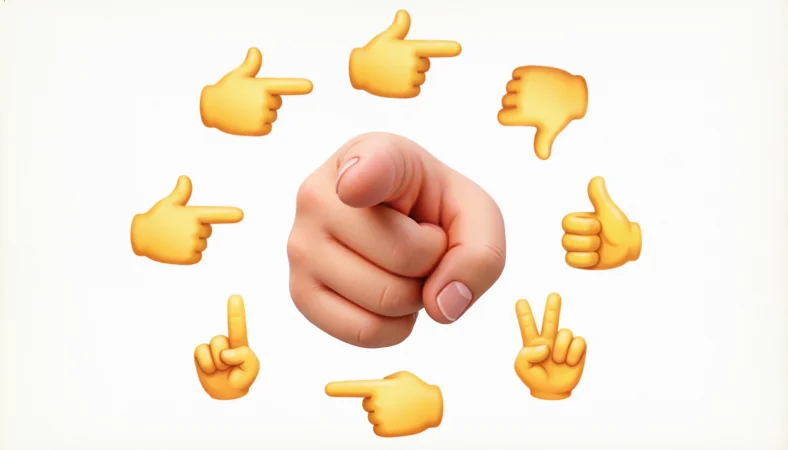
🫵 (Index Pointing at the Viewer) usually means “you.” It’s commonly used to direct a message at someone, compliment them, tease them, ask a question, or emphasize a point. The tone can be friendly, playful, encouraging, or occasionally confrontational, depending on the conversation.
👀 Ever received a message with the you emoji and wondered what the sender actually meant? This simple emoji can add a personal touch, point directly at someone, or make a message feel playful and attention-grabbing. Depending on the conversation, it can suggest “you,” “this is about you,” “I mean you,” or even a teasing callout.
The you emoji can be a fun way to make digital conversations feel more direct and expressive. Whether you’re texting a friend, commenting on social media, or replying to someone you like, emoji context matters. The same emoji may feel friendly in one conversation and flirty, sarcastic, or teasing in another. Understanding the you emoji meaning helps you interpret messages more accurately and choose the right emoji when expressing yourself. In this guide, we’ll explore what the you emoji means, how people use it in texting and social media, and what it can communicate in different situations. We’ll also look at examples so you can understand its tone without overthinking a simple emoji.
What Does 🫵 Mean?
The official Unicode name for 🫵 is Index Pointing at the Viewer.
People often use it to:
- Get someone’s attention
- Say “you” without typing the word
- Give praise or recognition
- Make a playful accusation
- Add emphasis to a statement
- Point out who should respond
Unlike some facial-expression emojis, 🫵 doesn’t express an emotion on its own. Instead, it helps direct the message toward a specific person.
For example:
- You’re the MVP today! 🫵
The emoji highlights the compliment. - I’m talking to you. 🫵
The message feels more direct and personal. - Only you would think of that. 🫵😂
The laughing emoji makes the tone playful rather than serious.
How Context Changes the Meaning
The same emoji can feel very different depending on the words around it.
Friendly
You’ve got this! 🫵💪
This feels supportive and encouraging.
Playful
I knew you’d be the first one to reply. 🫵😄
Here, it’s lighthearted teasing.
Serious
This part is your responsibility. 🫵
Without softer language or other emojis, it may sound more direct or firm.
Celebratory
Today’s winner is… 🫵🏆
The emoji creates excitement by pointing to the recipient.
Common Text Message Examples
| Message | Likely Meaning | Why Context Matters |
| I believe in you. 🫵❤️ | Encouragement | The heart makes the message warm and supportive. |
| You’re next. 🫵 | Calling on someone | Could be exciting or serious depending on the situation. |
| This one’s for you. 🫵🎁 | Personal dedication | The gift emoji adds a positive tone. |
| I’m waiting on you. 🫵 | Expecting a response | May feel neutral or slightly impatient based on previous messages. |
| You did it! 🫵🎉 | Celebration | The party emoji makes the meaning positive and congratulatory. |
Emojis Similar to 🫵
| Emoji | Official Name | Common Meaning | Tone | Where or When It Is Used |
| 🫵 | Index Pointing at the Viewer | Refers directly to “you” | Direct, playful, supportive | Compliments, reminders, jokes, recognition |
| 👈 | Backhand Index Pointing Left | Pointing to something on the left | Neutral | Highlighting nearby text or choices |
| 👉 | Backhand Index Pointing Right | Pointing to something on the right | Friendly, casual | Drawing attention to information or links |
| ☝️ | Index Pointing Up | Making a point or highlighting one thing | Informative | Tips, reminders, important notes |
| 👆 | Backhand Index Pointing Up | Pointing upward | Neutral | Directing attention above or emphasizing something |
| 👇 | Backhand Index Pointing Down | Pointing downward | Helpful | Referring to comments, links, or content below |
| 🙋 | Person Raising Hand | Volunteering or asking to speak | Positive | Questions, participation, volunteering |
| 👏 | Clapping Hands | Praise or applause | Celebratory | Congratulating or showing appreciation |
Key Differences
🫵 is unique because it points directly at the viewer, making the message feel personal. Other pointing-hand emojis usually indicate a direction rather than a person.
For example:
- 👉 points toward something beside the text.
- ☝️ usually emphasizes an idea or important point.
- 🫵 specifically highlights the person receiving the message.
Because of that, 🫵 often feels more engaging and conversational.
Can 🫵 Be Rude?
Sometimes.
The emoji itself isn’t rude, but the surrounding message determines how it’s received.
For example:
- Thanks for helping! 🫵😊 feels appreciative.
- This is all your fault. 🫵 feels accusatory.
Before assuming negative intent, consider:
- The rest of the message
- Your relationship with the sender
- Whether playful emojis are also included
- The overall tone of the conversation
How Should You Respond?
Your reply should match the conversation.
If it’s supportive:
“Thanks! I appreciate that.”
If it’s playful:
“Haha, guilty! 😄”
If someone is asking for your attention:
“Yep, I’m here. What’s up?”
If the message seems unclear:
“Were you talking about me?”
A simple clarification is often better than guessing the sender’s intent.
Official Emoji Information
- Official Unicode Name: Index Pointing at the Viewer
- Emoji: 🫵
- Approved: Unicode 14.0 (2021)
- Emoji Version: Emoji 14.0
Although the design varies slightly between devices, the meaning remains the same: a hand pointing directly toward the viewer.
Frequently Asked Questions
Does 🫵 always mean “you”?
Usually, yes. However, it can also be used to emphasize a statement, highlight someone’s achievement, or jokingly call someone out.
Is 🫵 a positive emoji?
It can be. Many people use it for compliments, encouragement, and celebrations. It may also sound critical if paired with negative wording.
Can 🫵 replace the word “you”?
In casual messages, yes. Many people use it as a visual replacement for the word “you,” especially in short texts or social media captions.
Why does 🫵 look different on different phones?
Each device maker designs emojis in its own visual style. Even though the artwork varies slightly, the emoji represents the same Unicode character.
Conclusion
🫵 is a simple but expressive emoji that puts the focus directly on the other person. Most often, it means “you,” but its emotional tone depends on the surrounding words. It can encourage, congratulate, joke, or emphasize a point, so reading the full message is always the best way to understand what the sender intends.

Daniel Thompson is a content writer at EmojissLife.com, where he creates fun, relatable and easy-to-read emoji content that helps readers express every mood and moment. With a passion for digital communication and creative storytelling, he turns everyday emotions into engaging emoji guides and ideas.