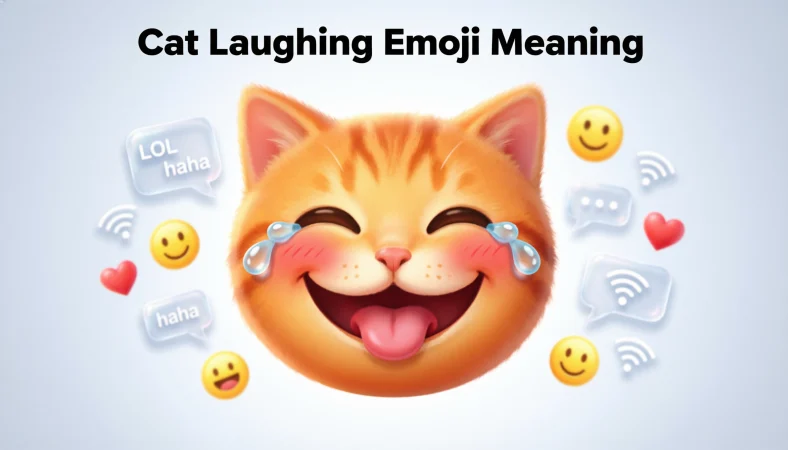
The cat laughing emoji usually refers to a laughing cat face, such as 😹 (“Cat With Tears of Joy”). It expresses strong amusement, laughter, or finding something extremely funny. Depending on the conversation, it can also make a reaction feel more playful, cute, or dramatic than a regular laughing emoji.
Have you ever seen a cat laughing emoji in a message and wondered why someone chose a cat instead of a regular laughing face? 😹 It may look like a simple funny reaction, but the emoji can add a playful and expressive tone to a conversation. People commonly use it when something is hilarious, ridiculous, adorable, or unexpectedly funny. Its meaning can also shift slightly depending on the context, the relationship between the people chatting, and the emojis around it.
In this guide, we’ll explain the cat laughing emoji meaning in clear, everyday language, along with common uses, texting examples, and situations where it fits best. Whether you’re a student, social media user, or simply trying to understand modern emoji conversations, this guide will help you interpret 😹 naturally and confidently.
What Does the Cat Laughing Emoji 😹 Mean?
The official Unicode name for 😹 is Cat with Tears of Joy.
It combines two familiar ideas:
- A smiling cat face
- Tears caused by intense laughter
People commonly use it to show:
- Something is incredibly funny
- They are laughing at a joke or meme
- A playful or silly mood
- An over-the-top reaction to humor
Unlike some emojis, 😹 is generally positive and lighthearted. It rarely suggests sadness, even though tears are shown.
For example:
“I can’t believe you actually said that 😹”
Likely meaning: The sender found the comment hilarious.
How Context Changes Its Meaning
The same emoji can feel slightly different depending on the conversation.
Genuine laughter
When responding to a funny story or joke, 😹 simply means the person is laughing.
Example
“That video had me crying 😹”
Meaning: They found it extremely funny.
Playful teasing
Friends sometimes use 😹 while joking with each other.
Example
“You forgot your keys again? 😹”
Meaning: Gentle teasing rather than criticism.
Dramatic reaction
Sometimes the emoji exaggerates a reaction for humor.
Example
“This meeting could’ve been an email 😹”
Meaning: The speaker is joking about the situation.
The surrounding words matter more than the emoji itself. Avoid assuming it means sarcasm, mockery, or disrespect unless the rest of the conversation clearly points that way.
Emojis Similar to 😹
| Emoji | Official Name | Common Meaning | Tone | Where or When It Is Used |
| 😹 | Cat with Tears of Joy | Laughing very hard with a playful feel | Playful | Funny texts, memes, jokes, lighthearted chats |
| 😂 | Face with Tears of Joy | Laughing so hard that tears appear | Joyful | Everyday conversations, reactions to jokes |
| 😺 | Grinning Cat | Happy, cheerful cat expression | Friendly | Cute messages and positive reactions |
| 😸 | Grinning Cat with Smiling Eyes | Big smile with excitement | Warm and playful | Celebrations, happy conversations |
| 🤣 | Rolling on the Floor Laughing | Extremely intense laughter | Over-the-top | Hilarious stories and viral memes |
| 😆 | Grinning Squinting Face | Big laugh or excitement | Energetic | Casual chats and funny moments |
| 😅 | Grinning Face with Sweat | Nervous laugh or relief | Awkward but positive | Embarrassing or tense situations with humor |
| 🙀 | Weary Cat | Shock or surprise | Dramatic | Unexpected news or exaggerated reactions |
Which Emojis Are Most Commonly Confused With 😹?
The emoji people confuse with 😹 most often is 😂.
The biggest difference is appearance and style:
- 😹 uses a cat face, making the reaction feel cuter, more playful, or more whimsical.
- 😂 is the standard human face used for laughing in most conversations.
- 🤣 shows even stronger laughter, as if someone is laughing uncontrollably.
- 😺 and 😸 show happiness but not necessarily laughter with tears.
If you’re simply reacting to something funny, both 😹 and 😂 work well. If you want a more cute or cat-themed reaction, 😹 is a natural choice.
Is the Cat Laughing Emoji Friendly or Rude?
Most of the time, it’s friendly.
It usually suggests:
- Enjoyment
- Shared humor
- A playful reaction
- Casual conversation
However, any laughing emoji can feel insensitive if it’s used while someone is discussing a serious problem.
For example:
Person A: “I failed my driving test.”
Reply: “😹”
Without supportive words, that response may seem dismissive.
Adding context changes the tone:
“I’m sorry that happened. You’ll get it next time 😹”
Here, the emoji softens the mood rather than making fun of the person.
Example Messages and What They Mean
Example 1
Message
“Your autocorrect just made my day 😹”
Likely meaning
The sender genuinely found the mistake funny.
Example 2
Message
“That cat video is hilarious 😹”
Likely meaning
They’re reacting enthusiastically to something entertaining.
Example 3
Message
“You really wore two different shoes? 😹”
Likely meaning
Lighthearted teasing between people who know each other well.
Example 4
Message
“I needed that laugh today 😹”
Likely meaning
The emoji expresses appreciation and happiness after something funny.
How Should You Respond?
Your reply should match the conversation.
If someone sends 😹 after a joke, you might answer:
- “Glad it made you laugh!”
- “I couldn’t stop laughing either.”
- “That was too funny.”
- “I knew you’d enjoy that.”
If you’re unsure whether they’re teasing or simply laughing, responding to the message itself, not just the emoji is usually the safest approach.
Copy and Paste
You can copy the emoji here:
😹
Official Name: Cat with Tears of Joy
Frequently Asked Questions
What is the official name of 😹?
Its official Unicode name is Cat with Tears of Joy.
Is 😹 the same as 😂?
Not exactly. Both express laughter, but 😹 uses a cat face, giving it a more playful and whimsical appearance.
Can 😹 be sarcastic?
Sometimes, but only if the surrounding message suggests sarcasm. The emoji alone does not automatically indicate it.
Does 😹 mean someone is making fun of me?
Usually not. In most conversations, it simply means the sender found something funny. Consider the full message before assuming negative intent.
Why do some people use 😹 instead of 😂?
Some people prefer the cat version because it looks cuter, feels more expressive, or matches their personal style. Both generally communicate laughter.
Conclusion
The 😹 Cat with Tears of Joy emoji is a playful way to show laughter, amusement, and lighthearted fun. In most conversations, it carries the same general meaning as 😂 but with a more whimsical, cat-inspired look. As with any emoji, the surrounding words and the overall conversation provide the clearest clues to what the sender intends.

Michael Anderson is a content writer at EmojissLife.com, where he creates fun, relatable, and easy-to-read emoji guides, meanings and creative ideas. He enjoys turning everyday conversations into expressive content that helps readers find the perfect emojis for every mood and moment.