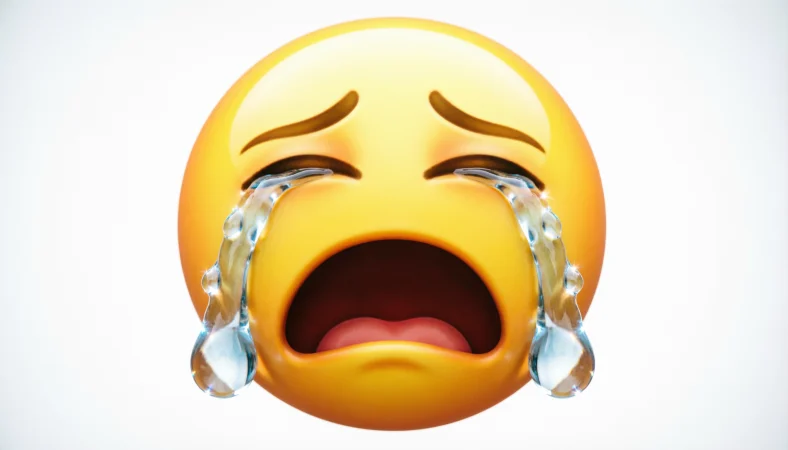
😭 on TikTok usually means “I am crying because this is too much.” The reason for the crying can be sadness, laughter, embarrassment, frustration, or strong emotion. When used under a funny video, it often means something closer to “This is so funny!” than actual sadness.
The TikTok crying emoji 😭 usually means intense emotion, but it does not always mean someone is genuinely sad. In many TikTok comments, captions, and messages, 😭 can show that something is extremely funny, embarrassing, overwhelming, touching, frustrating, or dramatic. The exact meaning depends on the video, caption, surrounding words, and conversation.
Officially, 😭 is called Loudly Crying Face. Unicode lists it as U+1F62D, while 😢 is a separate emoji called Crying Face.
What Does the TikTok Crying Emoji 😭 Mean?
The most common informal meaning of 😭 is an over-the-top emotional reaction.
The emoji shows a face crying heavily, so it naturally communicates stronger emotion than a mild sad reaction. However, online context often changes why the person is “crying.”
Someone may use 😭 to express:
- Genuine sadness or heartbreak
- Laughing so hard that something made them “cry”
- Secondhand embarrassment
- Being overwhelmed or shocked
- Frustration with a situation
- Feeling deeply touched by something emotional
- A dramatic reaction to something relatable
For example:
“Why would he say that 😭”
This could mean the person finds the comment hilarious, awkward, shocking, or frustrating. The words and situation tell you more than the emoji alone.
The emotional intensity matters
A useful way to understand 😭 is that it usually suggests more intensity than 😢.
Compare these reactions:
- “That’s sad 😢” — straightforward sadness.
- “THAT’S SO SAD 😭” — stronger or more overwhelming sadness.
- “He really fell off the chair 😭” — probably laughter, not sadness.
So, the crying itself is not always literal. The emoji often exaggerates the sender’s reaction.
Why 😭 Can Mean “That’s So Funny”
One of the easiest ways to misunderstand the TikTok crying emoji is to assume every use means sadness.
Under a joke, funny video, awkward moment, or ridiculous comment, 😭 often works like a visual version of:
- “I can’t stop laughing.”
- “This is killing me.”
- “Why is this so funny?”
- “I’m done.”
- “I cannot deal with this.”
It is a reaction of emotional overload. In a humorous context, that overload is usually laughter.
For example:
“The way she looked at the camera after that 😭”
Likely meaning: The moment was extremely funny or absurd.
Why: Nothing in the sentence suggests sadness. The crying face adds exaggerated amusement.
That is why you should avoid interpreting 😭 by itself when the surrounding content clearly points to humor.
When 😭 Actually Means Someone Is Sad
The emoji can still express real sadness, grief, disappointment, or emotional pain.
For example:
“I can’t believe the show is over 😭”
Likely meaning: Genuine disappointment or sadness.
Here, the message already expresses a loss or unhappy feeling, and 😭 makes that emotion feel stronger.
Another example:
“I miss my grandma so much 😭”
Likely meaning: Real sadness and longing.
In emotional conversations, it is usually best to respond to the words first rather than assuming the emoji is being playful.
What 😭 Means From Someone
When someone sends you 😭, the safest interpretation comes from the full message.
It does not automatically prove that the person is flirting, upset with you, laughing at you, or trying to hide a deeper feeling.
Consider these examples:
“Stoppp 😭”
Likely meaning: The sender is overwhelmed by what you just said. It could be laughter, embarrassment, disbelief, or playful protest.
The previous message matters. A ridiculous joke may make this funny. A sweet compliment may make it sound emotionally touched or shy.
“You did not just say that 😭”
Likely meaning: Shock, disbelief, or amusement.
The emoji makes the reaction feel more dramatic, but it does not tell you exactly whether the sender approves or disapproves.
“I needed this today 😭”
Likely meaning: The person feels genuinely touched, relieved, or emotionally affected.
Here, 😭 is more likely to show sincere emotion than laughter.
Is 😭 Friendly or Flirty?
😭 can appear in friendly, romantic, casual, or completely unrelated conversations. By itself, it is not a reliable flirting signal.
For example:
“You’re actually so sweet 😭”
This may sound warm and emotionally affected. Depending on the relationship, it could also feel affectionate.
But:
“Bro, what are you doing 😭”
is clearly more likely to be playful disbelief than flirting.
The relationship between the people, the rest of the conversation, and the sender’s normal emoji style matter much more than the crying emoji alone.
😭 Meaning in TikTok Comments
In TikTok comments, 😭 often acts as a quick reaction rather than a literal statement.
It may mean:
- “That was hilarious.”
- “This is painfully relatable.”
- “I feel bad, but this is funny.”
- “That was so awkward.”
- “Why would this happen?”
- “I’m emotionally overwhelmed.”
A comment such as:
“NOT THE DOG WALKING AWAY 😭”
usually reacts to the humor or unexpected nature of the video.
Meanwhile:
“This made me miss my dad 😭”
uses the same emoji for genuine emotion.
The difference comes from context, not from a special official TikTok definition. The character itself remains the Unicode emoji Loudly Crying Face.
😭 Compared With Similar Emojis
Several emojis involve tears or sadness, but they can create noticeably different impressions. Unicode lists these as separate emoji characters with distinct official names.
| Emoji | Official Name | Common Meaning | Tone | Where or When It Is Used |
|---|---|---|---|---|
| 😭 | Loudly Crying Face | Intense sadness, laughter, overwhelm, or dramatic reaction | Intense, dramatic, emotional | Funny videos, emotional posts, texts, strong reactions |
| 😢 | Crying Face | Sadness, sympathy, disappointment | Gently sad, sincere | Supportive messages, apologies, sad news |
| 🥹 | Face Holding Back Tears | Trying not to cry, feeling touched or emotional | Tender, emotional | Sweet moments, gratitude, heartfelt messages |
| 😥 | Sad but Relieved Face | Sadness mixed with relief or exhaustion | Weary, relieved | Difficult situations, stressful moments, mixed emotions |
| 😞 | Disappointed Face | Disappointment or discouragement | Quietly negative | Letdowns, missed opportunities, frustrating news |
| 🥺 | Pleading Face | A soft request, vulnerable feeling, or emotional appeal | Gentle, hopeful, vulnerable | Requests, affectionate messages, emotional reactions |
| 😂 | Face with Tears of Joy | Strong laughter | Clearly playful, amused | Jokes, memes, funny messages |
| 😩 | Weary Face | Exhaustion, frustration, or being fed up | Drained, dramatic | Complaints, stressful situations, relatable frustrations |
The most important differences
😭 vs. 😢: 😭 usually feels more intense and dramatic. 😢 is often a simpler expression of sadness.
😭 vs. 😂: 😂 is more clearly about laughter. 😭 can also mean laughter, but it leaves more room for other strong emotions.
😭 vs. 🥹: 🥹 often suggests holding back tears or feeling touched. 😭 looks more emotionally overwhelming.
😭 vs. 🥺: 🥺 is usually softer and more pleading. 😭 is more like the emotion has already overflowed.
If you want to show that something is funny without much ambiguity, 😂 may be the clearer choice. If you want to show a stronger, more dramatic reaction that could be funny or emotional, 😭 may fit better.
Can 😭 Be Sarcastic?
Sometimes, but sarcasm usually comes from the surrounding message rather than the emoji itself.
For example:
“Oh great, another meeting at 7 a.m. 😭”
This may exaggerate frustration in a humorous way.
However, 😭 alone does not automatically mean sarcasm. If the rest of the message is sincere, the emoji may be sincere too.
How to Respond When Someone Sends 😭
Match your response to the situation instead of reacting to the emoji alone.
If they are laughing
“😭 I know, I can’t believe that happened either.”
If they seem genuinely sad
“I’m sorry. Are you okay?”
If they seem overwhelmed or frustrated
“😭 That sounds like a lot. What happened?”
If you are not sure what they mean
“Wait, are you crying laughing or actually upset? 😭”
A clarifying response can be useful when the context is unclear. It is better than making a big assumption about someone’s emotions.
Official Name and Emoji Details
The official Unicode name for 😭 is Loudly Crying Face. Its code point is U+1F62D. The related 😢 emoji is separately named Crying Face and uses U+1F622. These official names help distinguish the two characters, even though people may casually call both the “crying emoji.”
The artwork can look somewhat different across devices and operating systems, but the underlying Unicode character remains the same. Unicode’s emoji charts show platform samples for supported emoji characters.
Copy and Paste the TikTok Crying Emoji
😭
Official name: Loudly Crying Face
Frequently Asked Questions
What does 😭 mean on TikTok?
On TikTok, 😭 usually shows a strong emotional reaction. Depending on the video or comment, it can mean genuine sadness, laughing extremely hard, embarrassment, frustration, or being emotionally overwhelmed.
Does 😭 mean laughing?
Yes, it can. When 😭 appears under something funny, absurd, or embarrassing, it often means the person is figuratively “crying” from laughter. Context determines whether the tears represent humor or real sadness.
What is the difference between 😭 and 😢?
😭 is Loudly Crying Face and usually feels more intense or dramatic. 😢 is Crying Face and often communicates simpler, quieter sadness.
Is 😭 a flirting emoji?
Not by itself. 😭 can appear in affectionate conversations, but it can also be used with friends, strangers, jokes, sad news, and everyday reactions. You need the surrounding conversation to judge whether any romantic meaning is present.
Why do people use 😭 instead of 😂?
😭 can make laughter feel more exaggerated or emotionally overwhelmed, while 😂 more directly signals laughter. The choice is personal and context-dependent.
Conclusion
The TikTok crying emoji 😭 is best understood as a sign of strong emotion rather than sadness alone. It can show real grief, disappointment, laughter, embarrassment, frustration, or feeling deeply touched. Before deciding what someone means, read the words around it and consider the situation. The same tears can mean “I’m heartbroken” in one message and “That was hilarious” in another.

Daniel Thompson is a content writer at EmojissLife.com, where he creates fun, relatable and easy-to-read emoji content that helps readers express every mood and moment. With a passion for digital communication and creative storytelling, he turns everyday emotions into engaging emoji guides and ideas.