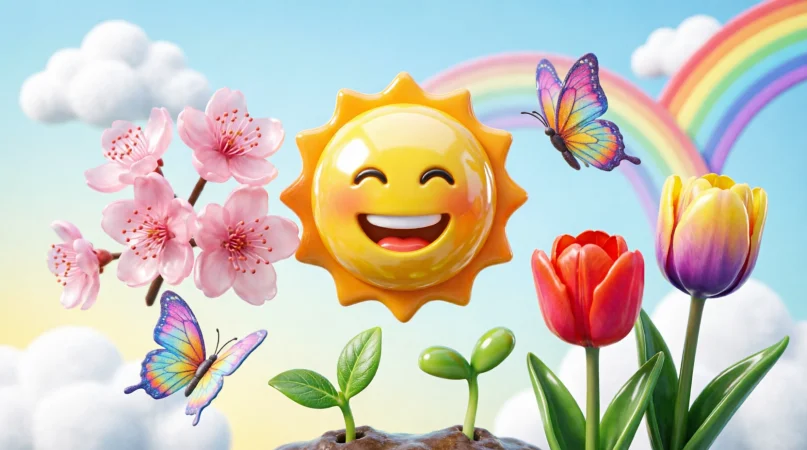
Spring emoji mean an emoji that represents the spring season, blooming flowers, fresh growth, warmer weather, or a new beginning. There is not one universal “Spring” emoji for everyday seasonal messaging. Popular choices include 🌸 Cherry Blossom, 🌷 Tulip, 🌱 Seedling, 🐝 Honeybee, 🦋 Butterfly, and 🌼 Blossom.
Spring emoji🌸 is one of the clearest spring emojis because cherry blossoms are strongly associated with spring and blooming nature. 🌷 can suggest spring flowers, while 🌱 focuses more on new growth and fresh beginnings. 🐝 and 🦋 add a nature or outdoor feeling.
Your choice depends on what you want to say:
- 🌸 — spring, blossoms, beauty, renewal
- 🌷 — flowers, springtime, affection
- 🌱 — growth, fresh starts, new life
- 🌼 — blooming flowers, happiness, nature
- 🐝 — flowers, gardens, pollination, spring nature
- 🦋 — transformation, nature, renewal
- 🌦️ — changing spring weather
What Does the Spring Emoji Mean?
A spring-themed emoji usually represents the season of spring, but the exact message depends on the symbol and surrounding text.
Flower emojis can make a message feel fresh, cheerful, gentle, or seasonal. Greenery such as 🌱 can shift the meaning toward growth and new beginnings. Animals such as 🐝 and 🦋 can make a post feel more connected to gardens, outdoor life, and nature.
For example:
“Finally, spring is here! 🌸”
Here, 🌸 clearly reinforces the seasonal meaning.
But:
“A fresh start 🌱”
The same spring theme is being expressed through the idea of growth rather than the season itself.
That difference matters. Emojis do not have one fixed emotional meaning in every conversation.
🌸 What Does the Cherry Blossom Emoji Mean?
🌸 Cherry Blossom is one of the most recognizable emojis for spring.
Unicode lists its keywords as blossom, cherry, flower, plant, spring, and springtime. It depicts a pink cherry blossom and is also closely associated with sakura and Japanese culture.
People may use 🌸 to express:
- The arrival of spring
- Flowers blooming
- Beauty and nature
- A soft or cheerful mood
- Renewal or a fresh season
- Cherry blossom viewing
- A connection with Japanese culture or sakura
It can also have meanings beyond spring. Emojipedia notes that the emoji can be used for ideas such as love and beauty, as well as simply providing a pink visual accent.
So, 🌸 does not automatically mean romance. The surrounding message matters.
🌷 What Does the Tulip Emoji Mean?
🌷 Tulip is another natural choice for spring-related messages.
Its official Unicode short name is tulip, with keywords including blossom, flower, growth, and tulip.
It can fit messages about:
- Spring flowers
- Gardening
- Fresh growth
- Flower arrangements
- Nature walks
- Appreciation or affection
For example:
“The garden is finally blooming 🌷”
The meaning is straightforward: the tulip adds a spring and flower theme.
In a personal message, however, 🌷 can also make the tone feel warm or affectionate. That does not necessarily make the message romantic.
🌱 What Does the Seedling Emoji Mean?
🌱 Seedling represents a young plant or sprout. It works especially well when the intended idea is growth, new beginnings, or something developing.
Unicode lists its keywords as plant, sapling, seedling, sprout, and young.
For example:
“Starting something new today 🌱”
Here, 🌱 is less about the weather and more about a fresh beginning.
It can also work for:
- Gardening
- Personal growth
- New projects
- Learning
- Healthy habits
- A new chapter in life
If your message is specifically about spring weather, 🌸 or 🌷 may be clearer. If it is about growth, 🌱 is usually a better fit.
🌼 What Does the Blossom Emoji Mean?
🌼 Blossom shows a flower viewed from above and is commonly used for flowers, beauty, happiness, appreciation, and nature.
It works well in spring messages such as:
“A beautiful morning in the garden 🌼”
Compared with 🌸, the blossom emoji has a more general flower meaning. 🌸 can point more specifically toward cherry blossoms and spring, while 🌼 can simply mean flower, blooming, beauty, or a cheerful nature theme.
Is a Spring Emoji Flirty or Romantic?
A spring-themed emoji can appear in an affectionate or romantic message, but the emoji alone does not prove romantic interest.
For example:
“This reminded me of you 🌷”
The flower may make the message feel warm or affectionate. Whether it is romantic depends on the relationship and the rest of the conversation.
Likewise:
“Hope your day gets better 🌸”
This can simply be a kind or supportive message.
Avoid reading too much into one emoji. The sender’s words, relationship with you, usual communication style, and overall conversation provide much more context.
How Spring Emojis Change the Tone of a Message
The same sentence can feel different depending on the emoji you add.
“Spring is here!”
- 🌸 — soft, floral, seasonal
- 🌷 — cheerful and flower-focused
- 🌱 — fresh and growth-oriented
- 🐝 — outdoorsy and nature-focused
- 🦋 — light and transformative
- 🌦️ — focused on spring weather
This makes emoji choice useful when you want to add a specific mood without changing the words themselves.
Spring Emojis Compared
| Emoji | Official Name | Common Meaning | Tone | Where or When It Is Used |
|---|---|---|---|---|
| 🌸 | Cherry Blossom | Spring, blossoms, beauty, nature | Gentle, fresh | Spring posts, nature photos, seasonal greetings |
| 🌷 | Tulip | Flowers, growth, spring | Cheerful, warm | Gardening, spring messages, flower photos |
| 🌱 | Seedling | Growth, new life, fresh starts | Hopeful, positive | New beginnings, plants, personal growth |
| 🌼 | Blossom | Flowering, beauty, happiness | Bright, friendly | Nature posts, spring greetings, floral messages |
| 🐝 | Honeybee | Bees, flowers, pollination, nature | Playful, lively | Gardens, outdoor posts, spring themes |
| 🦋 | Butterfly | Nature, change, transformation | Light, positive | Spring, personal change, outdoor scenes |
| 🌦️ | Sun Behind Rain Cloud | Mixed weather, rain and sunshine | Casual, seasonal | Weather updates and spring-day posts |
| 🌿 | Herb | Greenery, plants, natural surroundings | Calm, natural | Nature captions, gardening, fresh themes |
The biggest distinction is what part of spring you want to emphasize. 🌸 and 🌷 focus on flowers, while 🌱 highlights growth. 🐝 and 🦋 make the message more about living nature. 🌦️ works better when the subject is spring weather.
What Is the Official “Spring” Emoji?
There is an interesting technical distinction here.
Unicode includes 🀦 Mahjong Tile Spring, officially named MAHJONG TILE SPRING. Its code point is U+1F026, and it belongs to the Mahjong Tiles block alongside Mahjong Tile Summer, Mahjong Tile Autumn, and Mahjong Tile Winter.
However, 🀦 is not the normal emoji people use to represent the spring season in texts and captions. Emojipedia notes that Unicode has not recommended this character for emoji presentation, so it commonly appears as a black-and-white Unicode character rather than a colorful seasonal emoji.
That is why someone searching for “spring emoji” will usually be looking for symbols such as 🌸, 🌷, 🌱, or 🌼, rather than 🀦.
How to Use Spring Emojis in Texts
Spring emojis work naturally in short messages, captions, comments, and seasonal greetings.
Celebrating the season
“Hello, spring! 🌸🌷”
The flowers make the seasonal message immediately clear.
Talking about nature
“Everything is starting to bloom 🌼🌱”
The combination emphasizes flowers and new growth.
Talking about a garden
“Spent the afternoon planting flowers 🌷🐝”
The tulip creates the flower theme, while the bee adds a garden-and-nature feeling.
Describing a fresh start
“New season, new beginnings 🌱”
Here, the spring symbolism becomes more metaphorical.
Adding a soft touch
“Hope you have a beautiful day 🌸”
The flower makes the message feel gentle without automatically making it romantic.
Spring Emoji Combos
You can combine a few related emojis when one symbol does not express the whole idea.
Spring flowers:
🌸🌷🌼
Fresh growth:
🌱🌿🌸
Spring nature:
🌸🦋🐝🌱
Spring weather:
🌦️🌈🌱
Bright spring mood:
🌷☀️🦋
Keep combinations simple. One or two well-chosen emojis often communicate the idea more clearly than a long string.
Common Misunderstandings About Spring Emojis
🌸 does not always mean romance
Cherry blossoms can represent spring, nature, beauty, or a visual aesthetic. The surrounding message determines whether there is an affectionate meaning.
🌱 does not literally mean spring every time
A seedling can represent growth, development, or a fresh start even when the conversation has nothing to do with the season.
🌷 does not guarantee romantic interest
Flowers can appear in friendly, supportive, celebratory, or romantic messages.
🦋 does not always mean transformation
The butterfly can simply represent nature, beauty, or spring. A transformation meaning becomes clearer when the surrounding text supports it.
🀦 is not the usual seasonal spring symbol
Although its official Unicode name contains “Spring,” 🀦 is specifically a Mahjong tile. It should not be confused with the flower and nature emojis commonly used for the season.
Which Spring Emoji Should You Choose?
Choose the emoji based on the idea you want to emphasize:
- Want a clear springtime feeling? Use 🌸 or 🌷.
- Want to show new growth? Use 🌱.
- Want a general flower theme? Use 🌼.
- Want a garden or nature feeling? Try 🐝.
- Want to suggest change or natural beauty? 🦋 can work well.
- Want to mention changing spring weather? Use 🌦️.
- Want the literal Unicode character named for spring? That is 🀦, the Mahjong Tile Spring.
There is no single required spring emoji. Different symbols highlight different parts of the season.
How to Respond to a Spring Emoji
If someone sends you a spring-themed emoji, your response can match the context.
Friendly:
“Spring is finally here! 🌸”
Cheerful:
“Yes! Time for flowers and sunshine 🌷☀️”
Nature-focused:
“Everything looks so green again 🌱”
If you’re unsure what they mean:
“Cute 🌸 What made you send that?”
That last option is useful when the emoji is part of a personal conversation and you do not want to guess at the sender’s intention.
Copy and Paste Spring Emojis
Here are some easy options to copy:
🌸 🌷 🌱 🌼 🐝 🦋 🌦️ 🌿
For a seasonal greeting:
Hello, spring! 🌸🌷
For fresh growth:
🌱🌸
For a spring nature theme:
🌸🦋🐝🌱
For the literal Unicode character named Mahjong Tile Spring:
🀦
Frequently Asked Questions
What is the best emoji for spring?
There is no single official seasonal emoji used by everyone. 🌸 Cherry Blossom is one of the clearest choices for spring, while 🌷, 🌱, and 🌼 highlight flowers and new growth.
What does 🌸 mean in spring?
🌸 represents a cherry blossom and can suggest spring, blooming flowers, beauty, nature, and renewal. Unicode includes “spring” and “springtime” among its keywords.
What does 🌱 mean in a message?
🌱 usually represents a seedling or young growth. Depending on context, it can suggest plants, development, new beginnings, or personal growth.
Is 🌷 a spring emoji?
Yes. 🌷 is the Tulip emoji, and its Unicode keywords include “growth” and “blossom,” making it a natural choice for spring flowers and seasonal messages.
What emoji represents spring flowers?
🌸, 🌷, and 🌼 are among the most natural choices. 🌸 emphasizes cherry blossoms, 🌷 represents tulips, and 🌼 gives a more general blooming-flower feeling.
Is there an emoji officially called Spring?
Yes. 🀦 is officially named Mahjong Tile Spring. It is part of the Mahjong Tiles group, not a general-purpose seasonal flower emoji.
What is the difference between 🌸 and 🌼?
🌸 is specifically Cherry Blossom, while 🌼 is Blossom. 🌸 has a stronger cherry-blossom and spring association; 🌼 is a more general flower symbol.
Can spring emojis be used in romantic messages?
Yes, but their presence alone does not establish romantic meaning. Flowers such as 🌷 or 🌸 can add warmth or affection, while the surrounding words and relationship provide the actual context.
Final Takeaway
For most seasonal messages, 🌸, 🌷, 🌱, and 🌼 are more useful than the literal 🀦 Mahjong Tile Spring. Use 🌸 for blossoms and spring beauty, 🌷 for flowers, 🌱 for growth and fresh starts, and 🌼 for a general blooming-flower feeling. The best choice depends on the exact idea and tone you want to communicate.

Olivia Brown is a content writer at EmojissLife.com, where she creates fun, engaging, and easy-to-read emoji guides, meanings and collections. She enjoys turning everyday expressions into creative content that helps readers find the perfect emoji for every moment.
1 thought on “Spring Emoji 🌸🌱 Meaning and How to Use It for 2026”