Quick Answer:
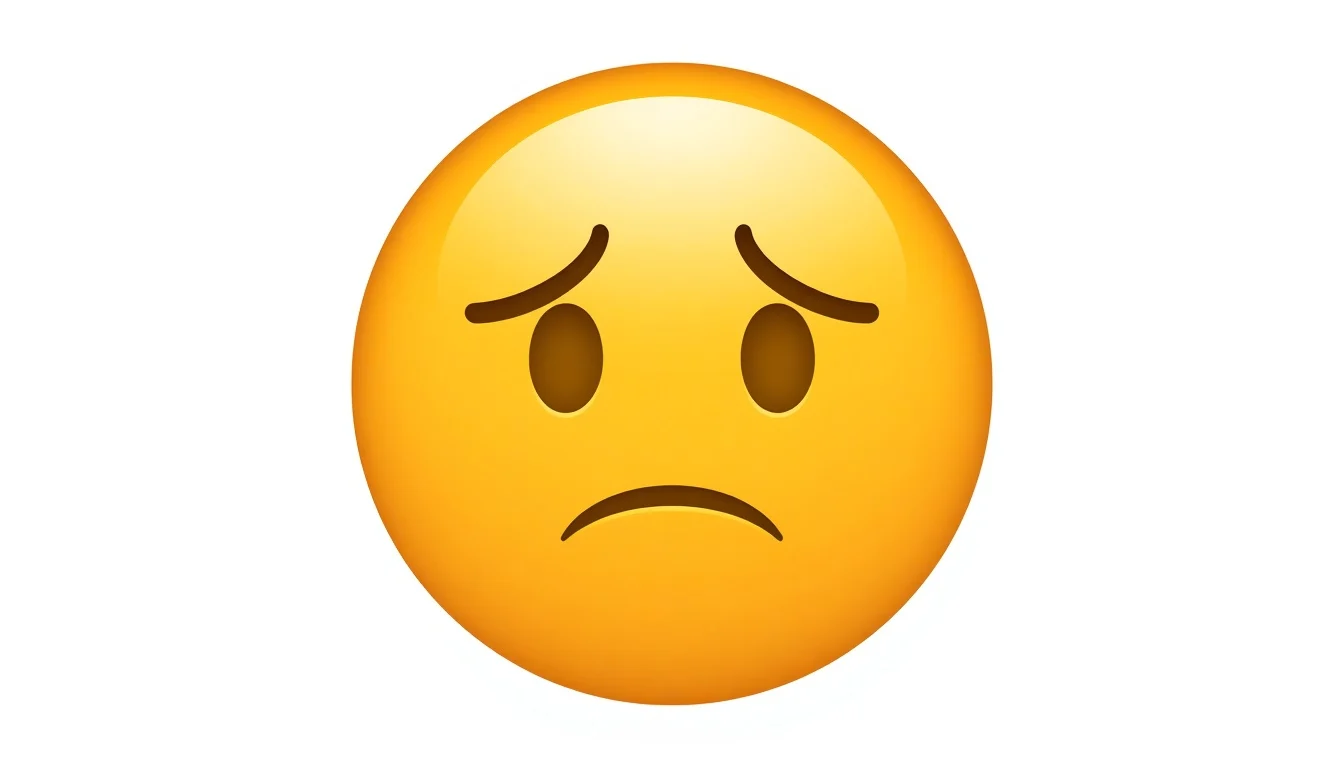
The 😞 emoji means disappointment, sadness, regret, or feeling let down. It usually communicates a quiet, unhappy emotion when something does not happen as expected. Depending on the conversation, it can also express frustration or sympathy.
The disappointed emoji 😞 is a simple yet powerful way to express sadness, regret, or dissatisfaction in digital conversations. Its downturned mouth and sad facial expression communicate feelings that words sometimes struggle to explain. Whether someone feels let down by unexpected news, unhappy with a situation, or discouraged by an outcome, this emoji helps convey those emotions naturally. It is commonly used in text messages, social media comments, online chats, and everyday conversations to show disappointment without writing a lengthy explanation.
The 😞 emoji can also carry different meanings depending on the context of a message. Someone might use it to express sympathy, react to disappointing news, show frustration over an unsuccessful attempt, or communicate that something did not go as expected. Although it looks similar to other sad-face emojis, its expression often suggests a feeling of disappointment rather than ordinary sadness. Understanding its meaning and proper usage can help you choose the right moment to use the disappointed emoji and make your digital communication more expressive and relatable.
What Does the Disappointed Emoji 😞 Represent?
The 😞 emoji represents an unhappy reaction to an event, decision, or situation. Unlike an angry face, it does not usually show strong aggression. Instead, it communicates a feeling of being discouraged, hurt, or emotionally let down.
Here are its most common interpretations.
1. Feeling Disappointed
This is the primary meaning. Someone may use 😞 when they expected a positive result but things turned out differently.
Example:
- “I didn’t get the job 😞”
- “The concert got canceled 😞”
In both messages, the emoji communicates disappointment about an unwanted outcome.
2. Sadness and Emotional Hurt
The emoji can also express sadness when something affects someone’s feelings. It may appear in conversations about personal problems, difficult experiences, or upsetting news.
Example:
- “I really miss those days 😞”
- “I thought things would be different 😞”
Here, the emoji adds an emotional touch to the message.
3. Regret or Remorse
Sometimes, people use 😞 when they feel bad about something they did or wish they had made a different decision.
Example:
- “I shouldn’t have said that 😞”
- “I wish I had handled things better 😞”
In these situations, it can communicate regret or an apology.
4. Feeling Let Down
The disappointed face may express dissatisfaction when someone or something fails to meet expectations.
Example:
- “You promised you would come, but you didn’t 😞”
- “I expected better from the final result 😞”
It can make a message sound more personal and emotional.
5. Mild Frustration
Although 😞 mainly expresses sadness and disappointment, it can sometimes communicate frustration.
Example:
- “My internet stopped working again 😞”
- “I missed the last bus 😞”
The feeling is usually closer to discouragement than anger.
What Does the Disappointed Emoji Mean in Text Messages?
In texting, 😞 often adds emotion to words that might otherwise sound neutral or incomplete.
Its meaning can change depending on the message and the relationship between the people communicating.
| Text message | Likely meaning |
|---|---|
| “I failed my exam 😞” | Sadness and disappointment |
| “You forgot my birthday 😞” | Feeling hurt or let down |
| “Maybe next time 😞” | Mild disappointment |
| “I miss you 😞” | Sadness or longing |
| “I made a mistake 😞” | Regret |
| “The trip is canceled 😞” | Disappointment about changed plans |
The emoji does not automatically mean someone is deeply upset. Sometimes it simply makes a disappointing statement feel softer and more expressive.
What Does 😞 Mean When Someone Sends It to You?
When someone sends you 😞, they may be expressing disappointment, sadness, or emotional discomfort.
The surrounding conversation can help you understand their intention.
- After bad news: They may feel sad about what happened.
- After a canceled plan: They may be disappointed that they cannot spend time with you.
- After an argument: They might feel hurt or regretful.
- After a personal mistake: They may be expressing guilt or remorse.
- After your achievement or news: They might be showing sympathy if the situation has a disappointing side.
For example:
You: “I won’t be able to visit this weekend.”
Them: “Oh, that’s disappointing 😞”
This likely means they were looking forward to seeing you.
However, one emoji cannot reveal someone’s complete feelings. Consider their words, communication style, and the history of your conversation before making assumptions.
Is the Disappointed Emoji Sad or Angry?
The 😞 emoji is primarily sad rather than angry.
Its facial expression features lowered eyes and a downward-curving mouth. This creates a quiet, unhappy appearance instead of an aggressive one.
Here is how to distinguish the emotions:
- 😞 — Disappointment or sadness.
- 😢 — Sadness with a visible tear.
- 😠 — Anger or irritation.
- 😔 — Thoughtfulness, sadness, or feeling down.
- 😣 — Struggling through something difficult.
Someone can feel both sad and frustrated, so the disappointed face may occasionally appear in an angry conversation. However, it does not usually communicate strong anger by itself.
Is 😞 a Positive or Negative Emoji?
The disappointed emoji is generally considered a negative-emotion emoji because it represents sadness, dissatisfaction, regret, or disappointment.
However, a negative emotional expression does not always make a message unfriendly.
For example:
- “I’m sorry you had to experience that 😞” — Sympathetic and caring.
- “I was hoping to see you today 😞” — Affectionate and disappointed.
- “That’s really unfortunate 😞” — Supportive and understanding.
Therefore, the emoji can appear in positive relationships and friendly conversations even though its emotional tone is sad.
What Does 😞 Mean From a Friend?
When a friend sends 😞, it usually communicates disappointment, sadness, or a desire to share an unhappy feeling.
For example:
Friend: “I didn’t make the team 😞”
You could respond:
- “I’m sorry. You worked really hard.”
- “Don’t give up. You can try again!”
- “I know you wanted this. I’m here for you.”
A friend might also send it when plans change, when they miss someone, or when something unexpected happens.
Is the Disappointed Emoji Flirty?
The 😞 emoji is not specifically a flirting emoji. Its main purpose is to express disappointment or sadness.
However, it can appear in affectionate or romantic conversations.
For example:
“Wish you were here 😞”
This message could communicate that someone misses you or feels disappointed about being apart.
Similarly:
“I wanted to spend more time with you 😞”
This may express romantic interest, but it could also be friendly depending on the relationship.
The emoji alone does not prove attraction. The words and existing relationship provide much more useful clues.
Related Emojis Similar to 😞 and Their Meanings
Several emojis express sadness, disappointment, frustration, or emotional discomfort. Although they may look similar, each one has a slightly different expression and conversational purpose.
| Emoji | Official Name | Common Meaning | Tone | Where or When It Is Used |
|---|---|---|---|---|
| 😞 | Disappointed Face | Feeling let down or unhappy | Sad, disappointed | Bad news and unmet expectations |
| 😔 | Pensive Face | Feeling thoughtful or down | Quiet, reflective | Regret and serious conversations |
| 😢 | Crying Face | Sadness and emotional hurt | Tearful, emotional | Upsetting news and sympathy |
| 😭 | Loudly Crying Face | Intense crying or exaggerated emotion | Dramatic, emotional | Major disappointment or strong reactions |
| 🙁 | Slightly Frowning Face | Mild sadness or concern | Gentle, unhappy | Small problems and concerns |
| 😟 | Worried Face | Anxiety or concern | Nervous, uneasy | Uncertainty and stressful situations |
| 😥 | Sad but Relieved Face | Sadness mixed with relief | Mixed, emotional | Difficult situations that end safely |
| 😣 | Persevering Face | Struggling or enduring difficulty | Strained, frustrated | Challenging moments |
| 😩 | Weary Face | Exhaustion or feeling overwhelmed | Dramatic, tired | Stressful or frustrating experiences |
😞 vs. 😔: What Is the Difference?
Both emojis express sadness, but their emotional emphasis differs.
- 😞 communicates disappointment or feeling let down.
- 😔 communicates quiet sadness, reflection, or regret.
Use 😞 when something did not go as expected. Choose 😔 when you want to express a more thoughtful or inward feeling.
😞 vs. 😢: Which One Shows More Sadness?
The 😢 emoji includes a visible tear, making its sadness more direct and emotional.
The 😞 emoji communicates disappointment without showing an actual tear.
For example:
- “I didn’t win the competition 😞” — Disappointment.
- “I really miss my family 😢” — More direct sadness.
😞 vs. 😭: Which One Is More Emotional?
The 😭 emoji represents loudly crying and often communicates a much stronger emotional reaction.
The 😞 emoji is generally more restrained.
For example:
- “My favorite restaurant closed 😞” — Disappointment.
- “My favorite restaurant closed 😭” — An exaggerated or intense emotional reaction.
😞 vs. 🙁: What Makes Them Different?
The 🙁 emoji has a slightly frowning expression, which can communicate mild sadness or concern.
The 😞 emoji has a more downcast appearance and usually conveys stronger disappointment.
Choose 🙁 for a mild unhappy reaction and 😞 when you want to emphasize feeling let down.
Disappointed Emoji Examples in Everyday Conversations
Here are some realistic examples showing how people might use the emoji in different situations.
1. After receiving bad news
“Unfortunately, the event has been postponed 😞”
Meaning: The sender is disappointed about the change.
2. When plans do not work out
“I was really looking forward to our weekend trip 😞”
Meaning: The sender feels sad because the trip will not happen.
3. When someone makes a mistake
“I forgot to submit my assignment 😞”
Meaning: The sender regrets forgetting an important task.
4. When missing someone
“I haven’t seen you in so long 😞”
Meaning: The sender feels sad about being apart.
5. When something is unsuccessful
“I tried my best, but it didn’t work out 😞”
Meaning: The sender is discouraged by the result.
6. When expressing sympathy
“I’m sorry that happened to you 😞”
Meaning: The sender feels sorry about someone else’s difficult experience.
How to Respond When Someone Sends You 😞
Your response should match the situation rather than focusing only on the emoji.
Here are some natural replies.
| Situation | Possible Response |
|---|---|
| Someone failed an exam | “Don’t lose hope. You can do better next time.” |
| A friend misses you | “I miss you too!” |
| Someone feels disappointed | “I’m sorry things didn’t work out.” |
| Plans get canceled | “Hopefully, we can make it happen another time.” |
| Someone regrets a mistake | “It’s okay. Everyone makes mistakes.” |
| Someone shares bad news | “I’m here if you want to talk.” |
If you are unsure why someone sent the emoji, a simple question can help:
“Is everything okay?”
This gives them room to explain their feelings without making assumptions.
How to Copy and Paste the Disappointed Emoji 😞
You can copy the disappointed face emoji directly from here:
😞
Copy ready
Disappointed Face Emoji Copy 😞
Related combinations
😞💔
Copy
😞🥺
Copy
😞😢
Copy
You can paste the emoji into text messages, social media comments, captions, and other supported apps.
Official Name and Unicode Details of 😞
The official name of 😞 is Disappointed Face. It is a standard Unicode emoji used to represent disappointment and related unhappy feelings.
Here are its identification details:
| Detail | Information |
|---|---|
| Emoji | 😞 |
| Official Name | Disappointed Face |
| Unicode Code Point | U+1F61E |
| Unicode Version | Unicode 6.0 |
| Emoji Version | Emoji 1.0 |
| Category | Smileys & Emotion |
| General Meaning | Disappointment, sadness, regret |
| Common Appearance | Downcast eyes and a frowning mouth |
According to Emojipedia, this emoji was approved as part of Unicode 6.0 in 2010 and added to Emoji 1.0 in 2015. Its appearance can vary slightly across Apple, Google, Microsoft, and Samsung devices.
FAQs
1. What does 😞 mean?
The 😞 emoji means disappointment, sadness, regret, or feeling let down. People often use it when something does not happen as expected.
2. What is the name of 😞?
Its official Unicode name is Disappointed Face.
3. Does 😞 mean someone is sad?
Yes. It commonly expresses sadness, although disappointment and dissatisfaction are more specific interpretations.
4. What does 😞 mean from a girl or boy?
Regardless of who sends it, the emoji generally communicates disappointment or sadness. The surrounding conversation matters more than the sender’s gender.
5. Is 😞 different from 😔?
Yes. 😞 usually expresses disappointment, while 😔 often communicates thoughtful sadness, reflection, or regret.
6. Does 😞 mean someone is upset with you?
Not necessarily. Someone may be disappointed about a situation rather than angry with you personally. Read the surrounding message before assuming its meaning.
7. Can 😞 be used sarcastically?
Yes. In a playful conversation, someone might use it to exaggerate disappointment about a small inconvenience.
Example: “You ate the last cookie without me 😞”
8. Is 😞 appropriate for an apology?
Yes. It can help communicate regret or sadness when apologizing, especially when accompanied by sincere words.
9. How do I copy the disappointed emoji?
Simply select and copy 😞, then paste it into your preferred messaging or social media app.
Conclusion
The disappointed emoji 😞 expresses sadness, regret, and the feeling of being let down. It is useful when words alone do not fully communicate disappointment.Its meaning can change depending on the conversation, relationship, and situation. Whether someone is sharing bad news, expressing regret, or reacting to canceled plans, 😞 adds a clear emotional touch to the message.
Read More Articles
- OK Emoji Meaning 👌| Meaning, Symbol, Uses and Copy and Paste In 2026
- Emoji Kitchen Google | Create Fun and Unique Emoji Combinations Online In 2026

Michael Anderson is a content writer at EmojissLife.com, where he creates fun, relatable, and easy-to-read emoji guides, meanings and creative ideas. He enjoys turning everyday conversations into expressive content that helps readers find the perfect emojis for every mood and moment.