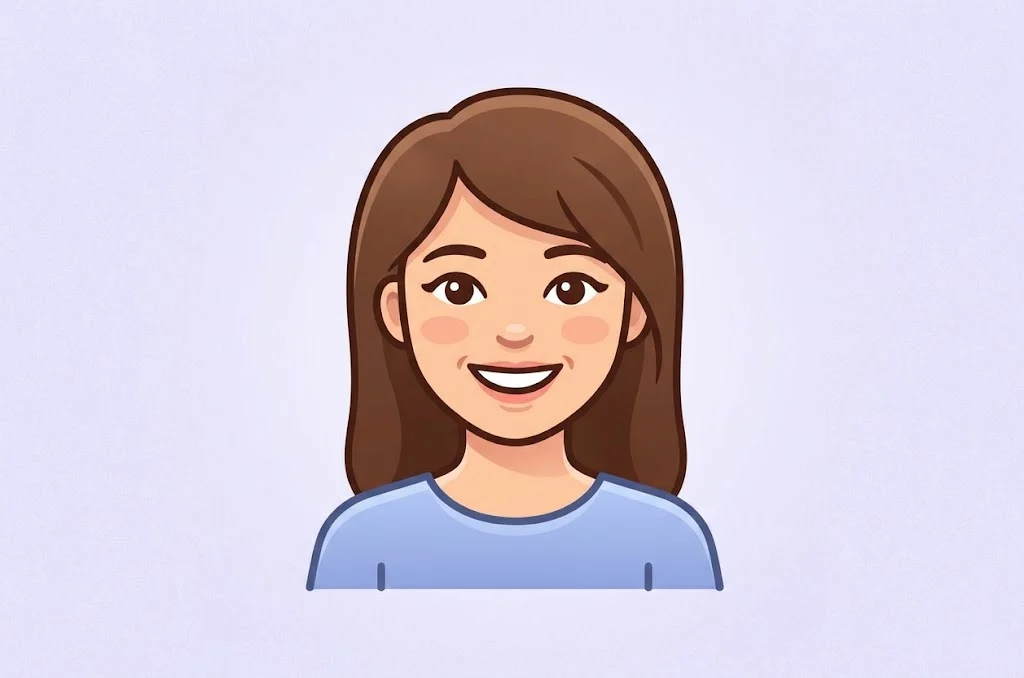
The 👩 woman emoji usually represents an adult woman, female identity, or a woman mentioned in a message. Depending on context, it can also add a feminine or playful tone, but it does not have one hidden meaning.
The 👩 woman emoji represents an adult woman and is commonly used when referring to a woman, yourself, another person, or women in general. Its official Unicode name is woman, and it is the female counterpart to 🧑 Person. The emoji itself does not automatically mean femininity, romance, attraction, or flirting. Its meaning usually comes from the words around it and the situation where it appears.
For example, “That woman is my professor 👩” is literal, while “Me trying to understand this 👩” could use it playfully as a stand-in for a woman or the sender. Unicode lists 👩 as U+1F469, and Emojipedia notes that it was approved in Unicode 6.0 in 2010 and added to Emoji 1.0 in 2015.
👩 Woman Emoji Meaning in Text
In texting, 👩 can have several straightforward uses.
It may identify a woman:
“I met a woman from my class today 👩”
It may refer to the sender:
“Just a woman with too much coffee 👩☕”
It may emphasize a feminine perspective:
“Woman to woman, I understand.”
It can also be used humorously as part of a caption:
“Me pretending I have everything figured out 👩”
The words around the emoji matter more than the emoji alone. A message such as “You got this 👩” has a completely different tone from “That woman 👩,” even though the same character appears.
What Tone Does the Woman Emoji Have?
The 👩 emoji is generally neutral. Its emotional tone comes from the surrounding message.
In a straightforward sentence, it can feel informative:
“My aunt is visiting 👩”
In a casual caption, it can feel playful:
“Just doing woman things 👩✨”
In a supportive message, it can reinforce a reference to a woman:
“She handled that so well 👩👏”
In a joke, it can become part of the humor:
“Me making one tiny mistake and acting like my life is over 👩”
So, rather than assigning one emotional meaning to 👩, it is better to read it together with the words, punctuation, other emojis, and overall conversation.
Does 👩 Mean “Girl” or “Woman”?
👩 specifically represents an adult woman, while 👧 represents a girl.
That distinction can matter when describing age or identity. Unicode separately identifies 👧 as “girl” and 👩 as “woman.”
For example:
“My daughter is seven 👧”
would make more sense than 👩 if the person being described is a child.
Likewise:
“She is an adult 👩”
fits the meaning of the woman emoji more directly.
In casual texting, people do not always use emojis with strict literal accuracy, so context still matters.
Can 👩 Be Flirty?
Yes, but 👩 by itself is not a flirting emoji.
A person might include it in a playful or romantic message, but the romantic meaning would usually come from the rest of the message.
For example:
“That woman has completely stolen my attention 👩❤️”
The romantic feeling comes from the wording and ❤️, not from 👩 alone.
Compare that with:
“My coworker is a woman 👩”
There is no obvious romantic meaning.
If someone sends you only 👩, it is usually safer not to assume they are flirting. A single emoji rarely provides enough context to establish romantic intent.
Does 👩 Have a Special Meaning From Someone?
Not automatically.
If someone sends 👩 in a message, consider what they were talking about immediately before it. They may be referring to:
themselves
another woman
women generally
a female character
a feminine perspective
a joke or caption
an occupation or activity involving a woman
For example:
“That was me all morning 👩”
could mean the sender is humorously representing themselves.
But:
“Ask her 👩”
could simply identify the woman being discussed.
The relationship between you and the sender does not automatically change the official meaning of the emoji. Context does.
👩 in Captions and Social Media
The woman emoji can work naturally in captions, comments, and posts where a woman is the subject.
Examples include:
“Just a woman enjoying her coffee 👩☕”
“Woman with a plan 👩✨”
“That woman deserves a raise 👩👏”
“Me after finally finishing everything on my list 👩”
In these examples, 👩 acts more like a visual representation of a woman than an emotional reaction.
Other emojis may add the emotional layer. For example, ✨ can make a caption feel celebratory, while 😂 can make it clearly humorous.
👩 Skin Tone and Appearance Variations
The basic 👩 emoji can appear with different skin tone modifiers. Unicode also supports woman emoji sequences involving characteristics such as red hair, curly hair, white hair, and baldness.
Examples include:
👩🏻 Woman: Light Skin Tone
👩🏽 Woman: Medium Skin Tone
👩🏿 Woman: Dark Skin Tone
👩🦰 Woman: Red Hair
👩🦱 Woman: Curly Hair
👩🦳 Woman: White Hair
👩🦲 Woman: Bald
These variations still represent a woman. The additional modifier or appearance simply adds visual detail.
Related Emojis and Their Meanings
Several emojis can look or feel closely related to 👩, but they serve different purposes.
Emoji
Official Name
Common Meaning
Tone
Where or When It Is Used
👩
Woman
Adult woman or female identity
Neutral
Referring to a woman, captions, descriptions
🧑
Person
Gender-neutral adult person
Neutral
When gender is unspecified or irrelevant
👧
Girl
Female child or young girl
Neutral
Children, daughters, childhood references
👵
Old Woman
Older woman or grandmother figure
Warm, neutral
Family, age, older women
👩🦰
Woman: Red Hair
Woman with red hair
Neutral, playful
Describing appearance or identity
👩🦱
Woman: Curly Hair
Woman with curly hair
Neutral
Appearance, identity, casual captions
👩🦳
Woman: White Hair
Woman with white hair
Neutral
Appearance, age, character references
👩🦲
Woman: Bald
Bald woman
Neutral
Appearance, identity, representation
The most important comparison is between 👩 and 🧑. 👩 explicitly represents a woman, while 🧑 is gender-neutral. 👧 is also easy to confuse with 👩, but it represents a girl rather than an adult woman. Unicode’s emoji list distinguishes these human-form characters by their official names and gender or age references.
👩 vs 🧑: What’s the Difference?
The main difference is gender representation.
👩 Woman specifically represents an adult woman.
🧑 Person represents an adult person without specifying gender.
So:
“The person helping us 🧑”
keeps gender unspecified.
“The woman helping us 👩”
identifies the person as a woman.
Neither emoji is automatically more emotional, friendly, formal, or romantic than the other.
👩 vs 👧: Woman or Girl?
The distinction is mainly age.
👧 represents a girl or female child.
👩 represents an adult woman.
That makes 👧 more suitable for childhood references, while 👩 is appropriate when referring to an adult woman.
In informal posts, people sometimes use emojis loosely, so the exact context can still affect how the message is understood.
Can 👩 Be Used Sarcastically?
Yes, but the sarcasm comes from the message, not from the emoji itself.
For example:
“Me saying I will go to bed early 👩”
followed by a long list of late-night activities could make the emoji part of a joke.
Likewise:
“Responsible adult behavior 👩”
could be sarcastic if the surrounding text describes something obviously irresponsible.
The emoji simply helps visually represent the person in the joke.
Can 👩 Be Used for Feminine or Empowering Messages?
Yes.
A woman may use 👩 in a message about her own identity, achievements, work, or everyday experiences.
Examples include:
“Woman with goals 👩✨”
“Proud of the woman I am becoming 👩”
“Just handling business 👩💼”
These uses are contextual rather than a fixed dictionary meaning. The surrounding words establish whether the message is proud, humorous, confident, or simply descriptive.
Common Ways People Use 👩
The emoji can appear in many ordinary situations.
Talking about yourself:
“Just a woman trying to get through Monday 👩”
Talking about someone else:
“That woman helped me find the store 👩”
Describing a character:
“She is the main character 👩✨”
Adding visual context:
“Woman at work 👩💻”
Making a humorous caption:
“Me pretending I know what I’m doing 👩”
Showing feminine identity:
“Proud to be a woman 👩”
The same emoji can therefore appear in serious, casual, funny, supportive, or descriptive messages.
How to Respond to the 👩 Emoji
If someone sends 👩 without additional context, there is no need to invent a hidden meaning.
You can respond based on the conversation.
Neutral:
“Yep, exactly.”
Playful:
“Okayyy, woman emoji understood 😂”
Curious:
“What does the 👩 mean here?”
Friendly:
“Got you 👩”
If they are referring to themselves:
“Honestly, same 😂”
Asking for context is often better than assuming the sender is flirting, joking, or making a serious statement.
When the 👩 Emoji Can Be Misunderstood
The biggest problem with 👩 is that it can be too general.
Someone may use it to mean:
a specific woman
themselves
women generally
a female character
a humorous version of themselves
a visual part of a caption
For this reason, 👩 alone usually does not tell you enough about someone’s feelings.
If someone sends:
“👩”
you cannot reliably conclude that they are flirting, upset, proud, sarcastic, or interested in you.
Look at the surrounding conversation before interpreting it.
Official Name and Unicode Details
The official short name listed by Unicode is woman, and its Unicode code point is U+1F469. Unicode identifies 👩 as an emoji with explicit female appearance.
Emojipedia reports that the character was approved in Unicode 6.0 in 2010 and added to Emoji 1.0 in 2015.
The emoji may look slightly different across platforms because Apple, Google, Samsung, and other platforms create their own visual designs while using the same underlying Unicode character.
The core meaning remains the same: woman.
Frequently Asked Questions
What does the 👩 woman emoji mean?
It represents an adult woman and can refer to a woman, female identity, or a feminine perspective.
What is the official name of 👩?
The official Unicode short name is “woman,” and its code point is U+1F469.
Does 👩 mean female?
Yes. It represents an adult woman and has an explicitly female appearance.
Is 👩 a flirting emoji?
Not by itself. A romantic meaning depends on the message and surrounding emojis.
What does 👩 mean in texting?
It can represent the sender, another woman, women generally, or a woman in a joke or caption.
Is 👩 the same as 🧑?
No. 👩 represents a woman, while 🧑 represents a gender-neutral adult person.
What is the difference between 👩 and 👧?
👩 represents an adult woman, while 👧 represents a girl or female child.
Can 👩 be sarcastic?
Yes. Sarcasm can come from the words surrounding the emoji rather than from 👩 itself.
Can I use 👩 to refer to myself?
Yes. People can use it as a visual representation of themselves in captions or casual messages.
Does 👩 mean “lady”?
It can visually represent a lady or woman, although its official Unicode short name is “woman.”
Does the 👩 emoji have different skin tones?
Yes. Woman emoji variants support skin tone modifiers.
Why does 👩 look different on different phones?
Different platforms create their own artwork for the same Unicode emoji character.
Conclusion
The 👩 woman emoji is one of the clearest human-form emojis: its basic meaning is simply woman. In texts and social posts, it can identify a woman, represent the sender, add a feminine reference, or become part of a playful caption. What it does not do is automatically signal flirting, attraction, sarcasm, or a particular emotion. Those meanings come from context. When you see 👩 in a message, read the surrounding words and consider the conversation before assigning extra meaning. If you need a gender-neutral adult reference, 🧑 may fit better, while 👧 is more appropriate for a girl. The simplest interpretation is often the right one: 👩 means woman.

Michael Anderson is a content writer at EmojissLife.com, where he creates fun, relatable, and easy-to-read emoji guides, meanings and creative ideas. He enjoys turning everyday conversations into expressive content that helps readers find the perfect emojis for every mood and moment.