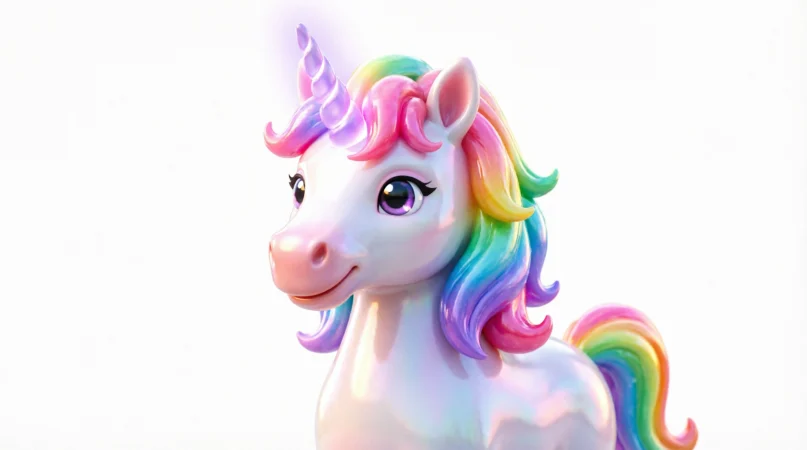
The unicorn emoji🦄 means “unicorn,” but in texts it can suggest much more: something magical, unusual, rare, special, dreamy, or wonderfully different.
The 🦄 unicorn emoji usually represents a mythical unicorn, but its meaning can go beyond the creature itself. People commonly use it to express magic, fantasy, uniqueness, imagination, wonder, or something rare and special. Depending on the conversation, 🦄 can also add a playful, dreamy, colorful, or positive tone. Emojipedia notes that it may also be used for peace, love, rainbow-related themes, “unicorn” startups, and other contextual meanings.
What Does the 🦄 Unicorn Emoji Mean?
The most direct meaning of 🦄 is a unicorn, the mythical creature traditionally described as a horse-like animal with one horn.
Unicode’s current emoji charts list U+1F984 with the short name unicorn, while the emoji was originally standardized under the name UNICORN FACE. It was introduced with Unicode 8.0 in 2015.
In everyday messages, however, people often use 🦄 symbolically. It can represent something that feels:
- Magical
- Imaginative
- Unique
- Rare
- Special
- Whimsical
- Colorful
- Unexpected
- Positive or exciting
These interpretations are not separate official definitions. They come from how the unicorn image is commonly used in conversation and culture.
🦄 Unicorn Emoji Meaning in Text
In texting, the unicorn emoji can act as a visual shortcut for several ideas.
Magic and fantasy
A common use is to create a dreamy or magical mood.
“I wish we could live in a castle 🦄✨”
The emoji supports the fantasy theme rather than referring to a literal animal.
Something unique or rare
Someone may use 🦄 when describing an unusual person, opportunity, product, or situation.
“A job with great pay, flexible hours, and no commute? 🦄”
Here, the unicorn represents something unusually desirable or difficult to find.
Imagination and creativity
The emoji can also fit conversations about creative ideas, fantasy stories, art, costumes, or imaginative experiences.
“Let’s make the party completely ridiculous and colorful 🦄🌈”
The emoji adds a playful visual style to the message.
Something special
🦄 can suggest that someone or something stands out from the ordinary.
“You’re honestly one of a kind 🦄”
The meaning here is closer to “unique” or “special” than to an actual unicorn.
Playfulness
Sometimes there is no deep meaning. The sender may simply use 🦄 because it makes a message feel colorful, cute, silly, or fun.
That is why interpreting an emoji requires looking at the complete message instead of assigning one fixed definition.
Is the Unicorn Emoji Positive?
Usually, 🦄 carries a positive, playful, or imaginative tone, especially when it appears with emojis such as ✨, 🌈, 💖, or 🪄.
For example:
“Everything worked out perfectly 🦄✨”
The combination suggests excitement or a magical feeling.
However, tone can change. Someone could use 🦄 ironically when describing something that is supposedly perfect but clearly is not:
“A meeting that actually ends early? 🦄”
In this example, the emoji can make the statement humorous rather than literal.
Does 🦄 Mean Something Is Rare?
It can.
The idea of a unicorn being rare or unusual has influenced an informal use of the emoji. Someone might call a rare opportunity, unusual combination, or exceptional person a “unicorn.”
For example:
“A roommate who cleans, pays on time, and is quiet? 🦄”
The emoji suggests that such a combination feels unusually hard to find.
This is a contextual use, not the official Unicode meaning of the character.
What Does 🦄 Mean From Someone?
When someone sends 🦄 to you, the meaning depends heavily on the surrounding message.
Consider these examples:
“You’re a unicorn 🦄”
This may be a compliment suggesting that you are unique or special.
“That date was so magical 🦄✨”
Here, the emoji reinforces the dreamy or exciting mood.
“I finally found one 🦄”
The sender may be describing something rare or difficult to find.
“Unicorns are adorable 🦄”
This is simply a literal reference to the mythical creature.
The sender’s normal communication style also matters. Someone who regularly uses colorful emojis may use 🦄 casually, while another person might use it deliberately to emphasize something unusual.
Is 🦄 a Flirty Emoji?
The unicorn emoji can appear in a flirty conversation, but it is not inherently romantic or sexual.
For example:
“You really are one of a kind 🦄”
In a romantic conversation, this could sound like a playful compliment.
But:
“My niece loves unicorns 🦄”
is clearly not a romantic use.
An emoji by itself cannot establish attraction or romantic interest. The conversation, wording, relationship, and communication style provide the relevant context.
Can 🦄 Be Used Sarcastically?
Yes. The unicorn emoji can contribute to irony or sarcasm when the surrounding words create that tone.
For example:
“A customer who reads the instructions before asking for help 🦄”
The message may jokingly describe something as extremely rare.
Likewise:
“A group project where everyone does their part 🦄”
can use the unicorn as a humorous symbol for an unusually ideal situation.
The sarcasm comes from the sentence and context; 🦄 simply reinforces the joke.
🦄 in Social and Cultural Contexts
The unicorn image has several established associations beyond fantasy.
Emojipedia notes that 🦄 can be used in connection with LGBTQ-related themes, partly because many platform designs feature colorful or rainbow-like elements. It can also appear in discussions of “unicorn” startups, where “unicorn” has a specialized business meaning.
These are contextual uses rather than universal meanings. A unicorn emoji in a business conversation may have a different purpose from one appearing in a fantasy-themed message.
Unicorn Emoji Examples in Text
| Message | Likely Meaning | Why the Context Matters |
|---|---|---|
| “I finally found my dream apartment 🦄” | Something rare or unusually good | The apartment is being compared to a rare find. |
| “Let’s have a magical night 🦄✨” | Fantasy or excitement | The surrounding words establish a dreamy mood. |
| “You’re one of a kind 🦄” | Unique or special | The emoji reinforces the compliment. |
| “My daughter wants a unicorn cake 🦄🎂” | Literal unicorn reference | The cake context makes the meaning straightforward. |
| “A boss who never schedules unnecessary meetings 🦄” | Humor or sarcasm | The emoji emphasizes how unusual the situation sounds. |
| “That was the most colorful party ever 🦄🌈” | Fun and colorful atmosphere | The emoji matches the visual theme. |
Emojis Similar to 🦄
| Emoji | Official Name | Common Meaning | Tone | Where or When It Is Used |
|---|---|---|---|---|
| 🦄 | Unicorn | Magic, uniqueness, fantasy, something rare | Playful, whimsical | Fantasy, compliments, unusual situations, jokes |
| 🐴 | Horse Face | Horse or equestrian topics | Neutral, friendly | Animals, riding, farms, horse-related conversations |
| 🌈 | Rainbow | Color, positivity, LGBTQ+ themes, hope | Bright, positive | Celebrations, supportive messages, colorful themes |
| ✨ | Sparkles | Magic, excitement, beauty, emphasis | Cheerful, expressive | Compliments, celebrations, magical or aesthetic messages |
| 🪄 | Magic Wand | Magic, fantasy, transformation | Playful, imaginative | Fantasy, wishes, magical jokes |
| 🧚 | Fairy | Fairies, fantasy, magic | Whimsical, playful | Fantasy stories, costumes, magical themes |
| 🐉 | Dragon | Mythical creature, fantasy, strength | Dramatic, adventurous | Fantasy, games, stories, mythical themes |
| 🦋 | Butterfly | Change, beauty, nature, transformation | Gentle, positive | Personal growth, nature, beauty, uplifting messages |
The most easily confused emoji here is 🐴 Horse Face, because both depict horse-like heads. The key visual difference is that 🦄 has a horn and a colorful mane, while 🐴 represents an ordinary horse.
🌈 and ✨ are also frequent companions to 🦄 rather than direct substitutes. They can help make a message feel colorful, magical, or celebratory. 🪄 is more directly associated with magic, while 🧚 and 🐉 point toward different mythical creatures.
🦄 vs. 🌈: What’s the Difference?
These emojis can appear together, but they communicate different ideas.
🦄 Unicorn focuses on a mythical creature and can suggest uniqueness, fantasy, or rarity.
🌈 Rainbow focuses on color, hope, positivity, or rainbow-related cultural contexts.
For example:
“A magical birthday party 🦄🌈✨”
The three emojis work together to create a colorful fantasy mood.
🦄 vs. 🐴: What’s the Difference?
The distinction is simple when the message is literal.
🐴 represents a horse.
🦄 represents a unicorn.
A message about horseback riding would normally make 🐴 more appropriate, while a fantasy story might call for 🦄.
The unicorn can also carry symbolic meanings such as “rare” or “one of a kind,” which the ordinary horse emoji does not usually convey.
🦄 vs. ✨: What’s the Difference?
✨ is often used to add emphasis, sparkle, excitement, or a magical feeling to another message.
🦄 is more specific because it directly represents a mythical creature.
Compare:
“You look amazing ✨”
with:
“You are truly one of a kind 🦄”
The first emphasizes the compliment. The second can suggest uniqueness.
Does 🦄 Have a Hidden Meaning?
There is no single hidden meaning that applies to every use of 🦄.
The emoji can have specialized meanings in particular communities or contexts. Emojipedia, for example, notes LGBTQ-related usage, business references involving “unicorn” startups, and occasional NSFW interpretations.
That does not mean every use has one of those meanings. Context is essential, and a normal fantasy or playful message should not automatically be given a hidden interpretation.
How to Respond to the Unicorn Emoji
Your response should match the message rather than the emoji alone.
If someone says:
“I finally found my dream job 🦄”
you might say:
“That’s amazing! Congrats!”
If they send:
“Let’s make tonight magical 🦄✨”
a playful response could be:
“I’m in! ✨”
If someone simply sends:
“🦄”
and you do not understand why, a simple:
“Haha, what does the unicorn mean here?”
can clarify the intent without making assumptions.
Can You Use 🦄 in a Professional Message?
It depends on the setting and your relationship with the recipient.
In a casual creative workplace conversation, 🦄 might fit naturally:
“We finally found a solution that checks every box 🦄”
In a formal business email, a plain sentence may be clearer.
The emoji itself is not inherently unprofessional, but the tone of the entire message and the expectations of the audience matter.
Official Unicorn Emoji Details
The current Unicode emoji charts list the character as:
🦄 Unicorn
- Unicode code point: U+1F984
- Unicode 8.0: 2015
- Emoji: 1.0
- Category: Animals & Nature
- Animal group: Animal-Mammal
Unicode’s historical documentation lists U+1F984 as UNICORN FACE, while current Unicode emoji data uses the short name unicorn.
Unicode 8.0, released in June 2015, included Unicorn Face among its new animal emoji.
The artwork can vary between platforms. Emojipedia notes that vendors have used different mane colors, horn designs, and orientations; WhatsApp, for example, has displayed its unicorn facing right while many other designs face left.
These visual differences do not create separate Unicode meanings.
Frequently Asked Questions
What does the unicorn emoji 🦄 mean?
🦄 represents a unicorn and can also suggest magic, fantasy, uniqueness, rarity, imagination, or something special. Its meaning depends on context.
What does 🦄 mean in texting?
In texting, it may be literal or symbolic. It can refer to unicorns, fantasy, something rare, a unique person, or an unusually good situation.
Does 🦄 mean something is rare?
It can. In informal conversation, a “unicorn” can describe something unusually difficult to find, so 🦄 may be used humorously to suggest rarity.
Is the unicorn emoji romantic?
Not by itself. It can appear in romantic or flirty messages, but it can also be completely friendly, humorous, creative, or literal.
What does 🦄 mean from someone you like?
It depends on the message. If someone calls you “one of a kind 🦄,” it may be a playful compliment, but the emoji alone does not prove romantic interest.
Why do people use 🦄 with 🌈?
The two can be combined to create a colorful, magical, or rainbow-themed message. 🌈 can also carry specific cultural meanings, while 🦄 can represent fantasy or uniqueness. The intended meaning depends on context.
What is the official name of 🦄?
Unicode’s current short name is unicorn. Historical Unicode documentation identifies U+1F984 as UNICORN FACE.
Conclusion
The 🦄 unicorn emoji can be literal, playful, or symbolic. It may represent a mythical creature, but in everyday messages it can also suggest magic, uniqueness, rarity, imagination, or something wonderfully different. When the emoji appears in a joke, compliment, romantic conversation, business discussion, or fantasy-themed message, the surrounding words are what give it its specific meaning.

Michael Anderson is a content writer at EmojissLife.com, where he creates fun, relatable, and easy-to-read emoji guides, meanings and creative ideas. He enjoys turning everyday conversations into expressive content that helps readers find the perfect emojis for every mood and moment.