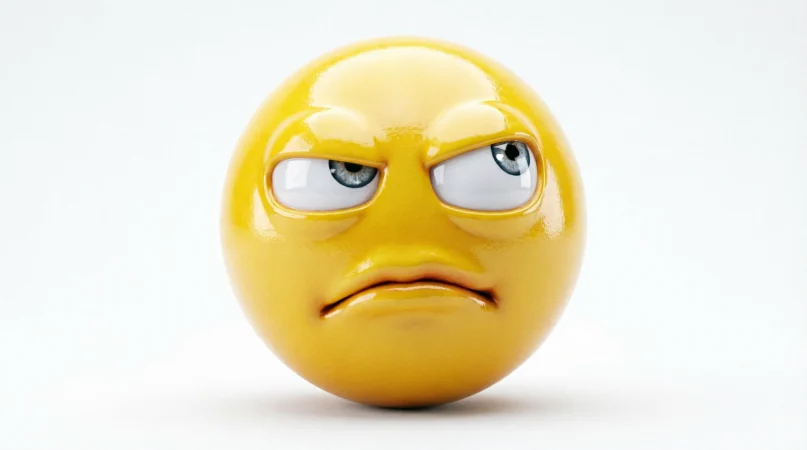
The rolling eye emoji 🙄, officially called Face with Rolling Eyes, usually expresses annoyance, disbelief, boredom, impatience, or an unimpressed reaction. It can also add sarcasm, playful attitude, or a sense of “Seriously?” to a message.
The Rolling Eye Emoji 🙄 is a popular way to express annoyance, disbelief, sarcasm, or frustration without saying much. It often appears in texts, comments, and social media when someone feels that a situation is ridiculous, repetitive, or hard to take seriously. However, its meaning can change depending on the conversation and the relationship between the people using it.
Understanding the Rolling Eye Emoji is about more than simply knowing what the symbol looks like. Its tone can range from playful teasing to genuine irritation, so context matters. In this guide, we’ll explain what 🙄 commonly means, how people use it in everyday conversations, and how to understand its tone in different situations. We’ll also look at examples so you can use the emoji naturally and avoid misreading the sender’s intention.
What Does the Rolling Eye Emoji 🙄 Usually Mean?
The visual idea behind 🙄 is simple: the eyes are turned upward as though the person is rolling their eyes. In everyday conversation, an eye roll can communicate a reaction without directly stating it.
The emoji commonly expresses:
- Mild annoyance
- Disbelief
- Impatience
- Boredom
- Disapproval
- Sarcasm
- Exasperation
- An “I already know” reaction
- An unimpressed attitude
Unicode’s current emoji data gives 🙄 the official name Face with Rolling Eyes and associates it with keywords including “eyeroll,” “shade,” “ugh,” and “whatever.”
Emojipedia describes the emoji as commonly conveying moderate disdain, disapproval, frustration, or boredom, while also noting that its tone can range from playful and sassy to resentful or sarcastic.
That range matters. 🙄 does not automatically mean that someone is angry with you. It can be a small reaction to something silly, repetitive, unbelievable, or mildly irritating.
🙄 Meaning in Text Messages
In texting, the rolling eye emoji often works as a reaction rather than a complete statement.
Someone may send:
“He said he was going to be five minutes late again 🙄”
The emoji adds the feeling of “Of course he did” or “That figures.”
It can also make a short response sound more sarcastic:
“Sure, because that worked so well last time 🙄”
Without the emoji, the sentence could be read as a straightforward comment. With 🙄, the sarcastic tone becomes much clearer.
Sometimes it simply communicates that the sender finds a situation tiring:
“Another meeting at 7 a.m. 🙄”
Here, the emoji expresses frustration or resignation rather than hostility toward a particular person.
Is 🙄 Rude?
It can be, depending on the situation.
An eye roll is generally associated with dismissing, questioning, or showing dissatisfaction with something someone said. Sending 🙄 directly after another person’s serious statement may therefore come across as disrespectful or dismissive.
Compare these examples:
“My boss changed the deadline again 🙄”
This is likely a complaint about a frustrating situation.
“I worked really hard on this project.”
“🙄”
The second example can feel much harsher because the emoji appears to dismiss the other person’s statement.
With friends, however, 🙄 may be harmless teasing:
“You’re still talking about your favorite movie? 🙄😂”
The laughing emoji and familiar relationship make the eye roll feel more playful.
Context determines the level of rudeness. The emoji itself does not guarantee that the sender intends to insult anyone.
Can 🙄 Be Sarcastic?
Yes. Sarcasm is one of the common ways 🙄 is used.
For example:
“Wow, what an amazing idea 🙄”
The words appear positive, but 🙄 signals that the sender probably does not mean them literally.
It can also emphasize an obviously exaggerated complaint:
“I have to wait five whole minutes for my coffee 🙄”
The sender may be joking about the situation rather than genuinely upset.
When 🙄 appears beside words that are deliberately exaggerated, the emoji can help signal that the message should not be taken completely literally.
Is 🙄 Flirty?
🙄 is not inherently a flirting emoji.
A person might use it in a playful conversation with someone they like, but the emoji alone does not establish romantic interest. For example:
“You really think you’re that funny? 🙄”
Depending on the conversation, this could be friendly teasing, flirtatious banter, or genuine annoyance.
The surrounding conversation, previous messages, relationship, and normal communication style are more useful clues than the emoji by itself.
If you are trying to determine whether someone is flirting, avoid treating 🙄 as proof of attraction. It can be used in romantic conversations, but its basic meaning remains an eye-roll reaction.
What Does 🙄 Mean From Someone?
When someone sends 🙄 to you, look at what they are reacting to before deciding what they mean.
If they send:
“You did that again 🙄”
they may be mildly annoyed or teasing you.
If they send:
“That movie was supposed to be scary? 🙄”
they are probably saying they were unimpressed.
If they send:
“Okayyy, I believe you 🙄😂”
the combination may make the message playful and skeptical rather than seriously angry.
A useful rule is to interpret 🙄 as a reaction to the conversation, not as a complete statement about the relationship.
When 🙄 Is Playful
The rolling eye emoji can be friendly when the conversation already has a joking tone.
For example:
“You know I’m always right 🙄😂”
The sender may be jokingly acting confident.
Another example:
“You brought home another plant? 🙄”
Between friends or partners, this could be affectionate teasing if buying plants is a familiar joke.
The addition of 😂, 😆, or another clearly playful emoji can sometimes soften the reaction, although even combinations should still be interpreted in context.
When 🙄 Sounds More Serious
The same emoji can sound much sharper when it appears alone or follows a serious statement.
For example:
“I was trying to explain something important to you.”
“🙄”
That response may communicate dismissal or irritation.
Likewise:
“You never listen to me 🙄”
sounds more critical than:
“You never listen to me 😂🙄”
The words, punctuation, and surrounding emojis can all change the emotional weight.
Related Emojis and How They Differ From 🙄
Several face emojis can express annoyance, skepticism, awkwardness, or an exaggerated reaction. They are not interchangeable, though.
| Emoji | Official Name | Common Meaning | Tone | Where or When It Is Used |
|---|---|---|---|---|
| 🙄 | Face with Rolling Eyes | Disbelief, annoyance, “whatever” | Sarcastic, unimpressed, playful, or irritated | Reactions to excuses, repetitive comments, or something ridiculous |
| 😒 | Unamused Face | Dissatisfaction, boredom, or lack of enthusiasm | Unimpressed, flat, mildly negative | When something is disappointing, annoying, or not funny |
| 😑 | Expressionless Face | No visible reaction or emotional response | Dry, deadpan, restrained | When words or a situation leave someone with little to say |
| 😏 | Smirking Face | Smugness, suggestiveness, or knowing confidence | Sly, teasing, sometimes flirtatious | Teasing, playful confidence, or suggestive comments |
| 🤨 | Face with Raised Eyebrow | Doubt, suspicion, or questioning | Skeptical, curious, doubtful | Reacting to a questionable claim or strange statement |
| 😬 | Grimacing Face | Awkwardness, discomfort, or nervousness | Uneasy, embarrassed, tense | Awkward situations, uncomfortable mistakes, or difficult reactions |
| 😮💨 | Face Exhaling | Sighing, relief, exhaustion, or emotional release | Tired, relieved, or resigned | After stress, frustration, effort, or a difficult moment |
| 🙃 | Upside-Down Face | Irony, awkward humor, or “everything is fine” when it is not | Playful, ironic, resigned | Jokes about frustrating or absurd situations |
| 😐 | Neutral Face | Little or no visible emotion | Neutral, restrained, sometimes dry | When someone wants to give a straightforward, unemotional reaction |
The most easily confused emoji is probably 😒 Unamused Face. Both 😒 and 🙄 can communicate annoyance or dissatisfaction, but 🙄 more strongly creates the visual idea of an eye roll. 😒 looks more like a flat, unimpressed reaction.
🤨 Face with Raised Eyebrow is different because it leans toward suspicion or questioning. If someone says something that seems unbelievable, 🤨 can mean “Really?” while 🙄 can mean “Oh, please.”
😏 Smirking Face should also be separated from 🙄. 😏 can suggest smugness, sly humor, or flirtation, while 🙄 generally communicates an eye-roll reaction.
🙃 Upside-Down Face is more about irony or an intentionally absurd mood. It can overlap with 🙄 in humorous situations, but it does not specifically represent an eye roll.
Examples of 🙄 in Texting
Example 1: Repeated Excuse
Message:
“He said he forgot again 🙄”
Likely meaning:
The sender is frustrated because the same thing has happened before.
Why context matters:
The words “again” and the eye-roll gesture together suggest repetition and exasperation.
Example 2: Playful Teasing
Message:
“You think you’re the funniest person here 🙄😂”
Likely meaning:
The sender is teasing rather than expressing serious anger.
Why context matters:
😂 makes the playful tone more obvious, although the exact interpretation still depends on the relationship.
Example 3: Disbelief
Message:
“She said she can finish the entire project in ten minutes 🙄”
Likely meaning:
The sender doubts the claim or finds it unrealistic.
Why context matters:
The emoji reacts to an exaggerated statement.
Example 4: Genuine Irritation
Message:
“I already explained this three times 🙄”
Likely meaning:
The sender is becoming impatient.
Why context matters:
The wording describes repeated communication, so the emoji carries more frustration.
Example 5: Sarcasm
Message:
“Yeah, because that plan definitely can’t go wrong 🙄”
Likely meaning:
The sender is being sarcastic and does not genuinely believe the plan is reliable.
Why context matters:
The positive wording conflicts with the eye-roll reaction, creating an ironic tone.
How to Respond to 🙄
There is no single correct response because 🙄 can range from joking to genuinely irritated.
If the person seems playful, you can respond playfully:
“Okay, okay 😂”
If they seem annoyed, a calm response may work better:
“Fair enough. I get why that was frustrating.”
If you genuinely cannot tell what they mean, clarification is often safer:
“Are you annoyed or just teasing me? 😅”
If the message follows a disagreement, avoid immediately assuming that the sender is joking. Read the surrounding conversation first.
When You Should Not Overinterpret 🙄
An emoji is only one part of a message.
If someone sends 🙄, it does not automatically mean:
- They dislike you
- They are angry
- They are rejecting you
- They are flirting
- They are being dishonest
- They want to end the conversation
- They are seriously offended
For example, a friend who frequently uses 🙄 may use it as a routine joking reaction. Someone who rarely uses emojis may intend the same character more seriously.
The sender’s normal communication style can therefore matter as much as the emoji itself.
🙄 on Different Devices
The basic emoji is standardized, but its artwork can vary between platforms and software.
Unicode identifies the character as U+1F644, Face with Rolling Eyes. Different vendors can create their own artwork while representing the same underlying emoji.
Emojipedia notes that the appearance of 🙄 has differed significantly across platforms, including an earlier Samsung design that showed the face looking to the side rather than using the familiar upward eye-roll appearance.
That means a small visual difference should not automatically be treated as a different emoji meaning.
Official Name and Unicode Details
The official Unicode name is Face with Rolling Eyes.
- Emoji: 🙄
- Unicode code point: U+1F644
- Official name: Face with Rolling Eyes
- Unicode version: Unicode 8.0
- Emoji version: Emoji 1.0
- Introduced: 2015
Unicode’s emoji charts list U+1F644 as Face with Rolling Eyes. Emojipedia also records its approval in Unicode 8.0 and inclusion in Emoji 1.0 in 2015.
Unicode 8.0 was released in 2015, and Unicode’s current documentation continues to list 🙄 under the same code point and official name.
Copy and Paste the Rolling Eye Emoji
🙄
You can copy the emoji above and use it in a text, comment, caption, or message.
Frequently Asked Questions
What does 🙄 mean from a girl or guy?
The meaning is not determined by the sender’s gender. 🙄 generally communicates an eye-roll reaction such as annoyance, disbelief, sarcasm, boredom, or playful exasperation. The conversation and relationship provide better context.
Does 🙄 mean “whatever”?
It can. “Whatever” is one of the informal ideas associated with the emoji, especially when someone is dismissing a comment or showing that they are not impressed.
Is 🙄 a bad emoji?
Not necessarily. It can sound rude or dismissive in a serious conversation, but it can also be harmless teasing among people who already communicate that way.
What is the difference between 🙄 and 😒?
🙄 specifically depicts an eye roll and often communicates disbelief, exasperation, or “whatever.” 😒, officially Unamused Face, has a more directly unimpressed or dissatisfied expression. Unicode lists these as two separate emoji characters.
Does 🙄 mean someone is annoyed?
It can. Annoyance is one common interpretation, but 🙄 may also express sarcasm, boredom, disbelief, playful teasing, or mild exasperation. The surrounding message determines which interpretation makes the most sense.
Is 🙄 a sarcastic emoji?
It can be used sarcastically, especially when the words and the eye-roll reaction do not match literally. It is also used without sarcasm in genuinely frustrating situations.
Can 🙄 mean “I don’t believe you”?
Yes. In a skeptical conversation, 🙄 can communicate something like “I don’t buy that” or “Seriously?” It does not prove that the sender thinks someone is lying; it may simply show disbelief or doubt.
Conclusion
The rolling eye emoji 🙄, officially Face with Rolling Eyes, is mainly a reaction emoji for annoyance, disbelief, impatience, boredom, sarcasm, or being unimpressed. Its tone can be playful or sharp, so the surrounding words and relationship matter.
When you receive 🙄, look at what came immediately before it. A joke may call for playful teasing, while a disagreement may signal genuine frustration. The safest interpretation is not to treat the emoji as a fixed emotional verdict, but to read it together with the rest of the conversation.

Michael Anderson is a content writer at EmojissLife.com, where he creates fun, relatable, and easy-to-read emoji guides, meanings and creative ideas. He enjoys turning everyday conversations into expressive content that helps readers find the perfect emojis for every mood and moment.