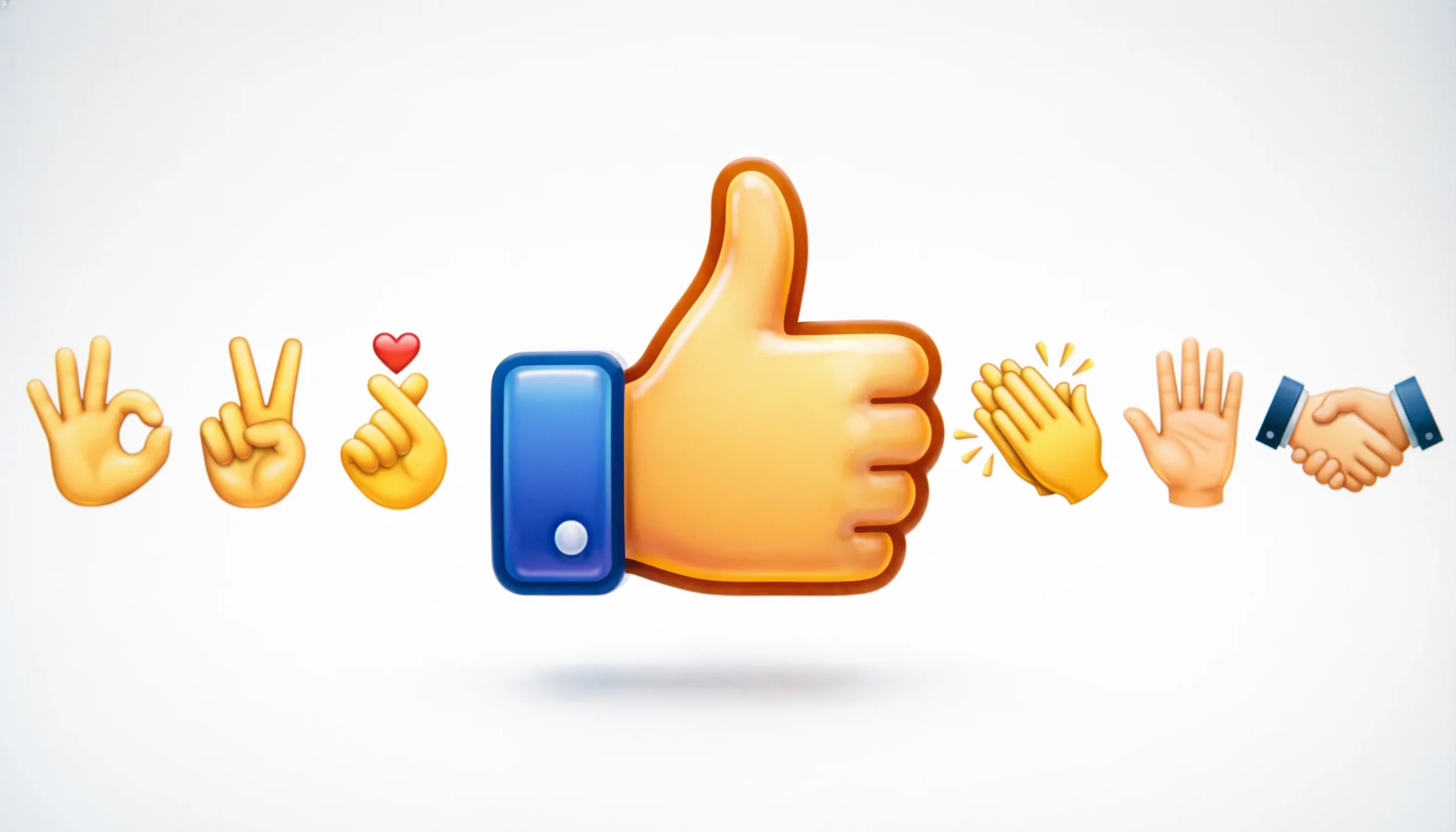
Quick Ans:👍 Thumbs Up usually means yes, okay, good, agreed, approved, or acknowledged.
- 👍 Brief: “Okay.”
- 👍 Sarcastic in some contexts: “Sure… okay.”
- 👍 Positive: “Great!”
- 👍 Agreeing: “I’m on board.”
- 👍 Acknowledging: “Got it.”
The emoji with thumbs up 👍 is commonly used to show approval, agreement, encouragement, acknowledgment, or that something is good or okay. Its official Unicode name is THUMBS UP SIGN, and its code point is U+1F44D. Unicode also lists keywords such as +1, good, like, thumb, and yes, which match many of its everyday uses.
A simple “👍” can mean “Sounds good,” “I agree,” “Nice,” or simply “Got it.” But like many emojis, its tone depends on the conversation. In some situations, especially very short replies, it can also come across as brief, sarcastic, or passive-aggressive
What Does 👍 Mean?
The thumbs-up emoji represents a raised thumb and is commonly associated with approval or a positive response.
Someone might send 👍 instead of typing:
- “Yes.”
- “Okay.”
- “Sounds good.”
- “I agree.”
- “Nice!”
- “Got it.”
- “Well done.”
- “That works.”
For example:
“I’ll meet you at 7.”
“👍”
Here, the emoji most likely means “Okay” or “Sounds good.”
If someone says:
“I finally finished the project!”
“👍”
it can work as a quick sign of approval or encouragement.
👍 Meaning in Texting
In texting, 👍 is often used as a quick acknowledgment. It can save someone from typing a full response while still showing that they saw and understood the message.
Examples
“Don’t forget to bring the documents.”
“👍”
Likely meaning: “Got it.”
“Pizza tonight?”
“👍”
Likely meaning: “Yes, sounds good.”
“You did a great job!”
“👍”
Here, it could mean “Thanks” or simply acknowledge the compliment.
The same emoji can therefore carry slightly different meanings depending on what came before it.
Is 👍 a Positive Emoji?
Usually, yes. The thumbs-up gesture is commonly associated with approval, agreement, and something being good. Unicode’s current emoji data includes “+1,” “good,” “like,” and “yes” as keywords for 👍.
However, the emoji itself does not guarantee a positive emotional attitude.
For example:
“Fine. 👍”
could feel completely different from:
“That sounds amazing! 👍”
The first may feel short or dismissive depending on the conversation, while the second clearly sounds more upbeat.
Can 👍 Sound Rude or Sarcastic?
Yes, in certain contexts.
A thumbs-up by itself is not inherently rude. But if someone expects a detailed or emotional response and receives only 👍, they may interpret it as cold, dismissive, or sarcastic.
For example:
“I spent all weekend working on this, and I’m really proud of it.”
“👍”
Depending on the relationship and previous conversation, that response might feel less enthusiastic than the sender expected.
Similarly:
“Sure, whatever you want. 👍”
can clearly have a sarcastic or irritated tone because of the surrounding words.
Emojipedia notes that the thumbs-up can be interpreted as passive-aggressive or sarcastic in some contexts, while still commonly functioning as a straightforward expression of approval.
What Does 👍 Mean From Someone?
When someone sends you 👍, don’t automatically look for a hidden meaning.
It may simply mean:
- “Okay.”
- “Yes.”
- “I understand.”
- “That works.”
- “Good.”
- “I agree.”
- “Thanks.”
- “I saw your message.”
The best interpretation comes from the message, timing, relationship, and the person’s usual texting style.
A person who normally sends short replies may use 👍 without intending anything negative. Someone who normally writes long, enthusiastic messages but suddenly responds with only 👍 may be communicating a more reserved tone.
Does 👍 Mean “I Like It”?
It can.
The thumbs-up emoji is closely associated with liking or approving something, and Unicode lists “like” among its keywords.
For example:
“What do you think of this outfit?”
“👍”
This could mean “I like it” or “Looks good.”
But it does not necessarily express strong excitement. If you want to sound more enthusiastic, something like 😍, 🔥, or 🙌 may communicate a stronger reaction depending on the situation.
Does 👍 Mean “Yes”?
Often, yes.
If someone asks:
“Want to grab coffee tomorrow?”
and you reply:
“👍”
the natural interpretation may be “Yes” or “Sounds good.”
It can also mean agreement with a statement:
“Let’s finish this tomorrow.”
“👍”
Here, it functions almost like “Agreed.”
Does 👍 Mean “Thank You”?
It can sometimes be used as a response to thanks, but it is not specifically a “thank you” emoji.
For example:
“Thanks for helping me!”
“👍”
This may simply acknowledge the person’s message.
If you want to clearly express gratitude, 🙏 or 😊 may make the intention more obvious, depending on the situation.
Is 👍 Flirty?
Usually, 👍 is not specifically a flirting emoji.
It can appear in a flirty conversation, but that does not make the emoji itself romantic. For example:
“See you tonight 😉”
“👍”
The overall message may have a romantic or playful context, but the thumbs-up itself mainly communicates acknowledgment or agreement.
It is better not to interpret 👍 as proof of attraction or romantic interest without other context.
Related Hand Emojis Compared With 👍
| Emoji | Official Name | Common Meaning | Tone | Where or When It Is Used |
|---|---|---|---|---|
| 👍 | Thumbs Up | Approval, agreement, okay, good | Positive, simple | Quick replies, agreement, acknowledgment |
| 👎 | Thumbs Down | Disapproval, disagreement, dislike | Negative, direct | Rejecting an idea or showing dislike |
| 👌 | OK Hand | Okay, all good, acceptable | Casual, reassuring | Confirming plans or saying something is fine |
| ✌️ | Victory Hand | Victory, peace, positive greeting | Cheerful, relaxed | Celebrations, casual messages, photos |
| 👏 | Clapping Hands | Applause, praise, congratulations | Supportive, enthusiastic | Celebrating an achievement or complimenting someone |
| 🙌 | Raising Hands | Celebration, praise, excitement | Energetic, joyful | Good news, success, celebrations |
| 🤝 | Handshake | Agreement, cooperation, deal | Professional, cooperative | Agreements, teamwork, mutual understanding |
| 🙏 | Folded Hands | Thanks, prayer, asking, appreciation | Respectful, grateful | Gratitude, requests, support, prayer |
The closest alternatives are 👎, 👌, and 👏. The difference is mainly in the type of response they communicate: 👍 generally approves or acknowledges, 👎 rejects or dislikes, 👌 confirms that something is okay, and 👏 adds praise or applause.
👍 vs. 👌
These two can sometimes be used interchangeably, but they are not exactly the same.
👍 tends to communicate:
“Yes.”
“Good.”
“I agree.”
“Sounds good.”
👌 more often communicates:
“Okay.”
“Everything is fine.”
“That works.”
For example:
“I’ll send the file tonight.”
“👍”
sounds like agreement or acknowledgment.
“Is everything okay?”
“👌”
can sound like “Everything’s fine.”
👍 vs. 👏
The difference is even clearer here.
👍 gives approval or acknowledgment.
👏 expresses applause or praise.
Compare:
“Are we still meeting at 6?”
“👍”
This means yes or okay.
“I got the job!”
“👏”
This shows congratulations or celebration.
You could also combine them:
“You absolutely nailed it! 👍👏”
That adds both approval and applause.
👍 Skin Tone Variations
The thumbs-up emoji can also be used with different skin-tone modifiers. Unicode lists five modified versions, ranging from 👍🏻 to 👍🏿.
The basic meaning remains the same; the modifier changes the represented skin tone.
You can copy these versions:
👍🏻 👍🏼 👍🏽 👍🏾 👍🏿
Thumbs Up Emoji Examples in Texts
1. Simple agreement
“Want to order pizza?”
“👍”
Meaning: Yes, that works.
2. Acknowledgment
“I left the keys on the kitchen counter.”
“👍”
Meaning: Got it.
3. Approval
“I think this design looks better.”
“👍”
Meaning: I agree or approve.
4. Encouragement
“I have my interview tomorrow.”
“You’ve got this! 👍”
Meaning: Support and encouragement.
5. Possible sarcasm
“Thanks for telling me five minutes before the deadline. 👍”
Meaning: The words make the emoji sound sarcastic rather than genuinely approving.
These examples are hypothetical illustrations. The exact tone can change depending on the conversation.
How to Respond to 👍
If someone sends you 👍, your response can be just as simple.
For casual agreement:
“Sounds good!”
For a friendly reply:
“Awesome 👍”
If you want to keep the conversation going:
“Great! What time works for you?”
If you’re unsure whether they are being sarcastic:
“Haha, are we good? 😄”
Usually, you don’t need to overthink a standalone thumbs-up. In many conversations, it simply means “Okay” or “Got it.”
Copy and Paste the Thumbs Up Emoji
Here is the basic emoji:
👍
Skin-tone options:
👍🏻 👍🏼 👍🏽 👍🏾 👍🏿
Official Details About 👍
The thumbs-up emoji has the following Unicode information:
- Emoji: 👍
- Unicode code point: U+1F44D
- Unicode name: THUMBS UP SIGN
- Current CLDR short name: thumbs up
- Unicode emoji version: Emoji 1.0
- Unicode approval: Unicode 6.0
- Common keywords: +1, good, like, hand, thumb, up, yes
Unicode’s current emoji charts identify 👍 as “thumbs up” and list +1, good, like, thumb, up, and yes among its associated keywords.
The emoji was approved in Unicode 6.0 in 2010 under the name “Thumbs Up Sign” and was added to Emoji 1.0 in 2015.
Different devices and platforms may draw the hand differently, but the basic thumbs-up gesture remains recognizable.
Frequently Asked Questions
What does 👍 mean in a text?
👍 usually means okay, yes, good, agreed, approved, or got it. The exact tone depends on the surrounding conversation.
Is 👍 a positive emoji?
Generally, yes. It commonly expresses approval, agreement, or acknowledgment. Unicode’s associated keywords include “good,” “like,” and “yes.”
Can 👍 be sarcastic?
Yes. In some contexts, a thumbs-up can sound sarcastic or passive-aggressive, especially when the surrounding words suggest frustration or disagreement.
Does 👍 mean “okay”?
Yes. One of its common uses is to communicate “Okay,” “Got it,” or “Sounds good.”
Is 👍 a flirting emoji?
Not specifically. It can appear in a romantic or playful conversation, but 👍 by itself usually communicates approval or acknowledgment rather than flirting.
What is the difference between 👍 and 👎?
👍 generally shows approval, agreement, or a positive response, while 👎 commonly expresses disapproval, disagreement, or dislike. Unicode lists them as the thumbs-up and thumbs-down counterparts.
What does 👍 mean from a girl or guy?
The emoji does not have a different fixed meaning based on the sender’s gender. Context, relationship, wording, and the person’s usual communication style are more useful for understanding the message.
Final Takeaway
The emoji with thumbs up 👍 is a simple way to say “yes,” “good,” “okay,” “I agree,” or “got it.” It is usually positive and straightforward, but a very short 👍 can sometimes feel cold or sarcastic depending on the conversation.
When you’re unsure what someone means, look at the words around the emoji and the overall tone of the conversation rather than assigning a hidden meaning to the thumbs-up itself.

Daniel Thompson is a content writer at EmojissLife.com, where he creates fun, relatable and easy-to-read emoji content that helps readers express every mood and moment. With a passion for digital communication and creative storytelling, he turns everyday emotions into engaging emoji guides and ideas.