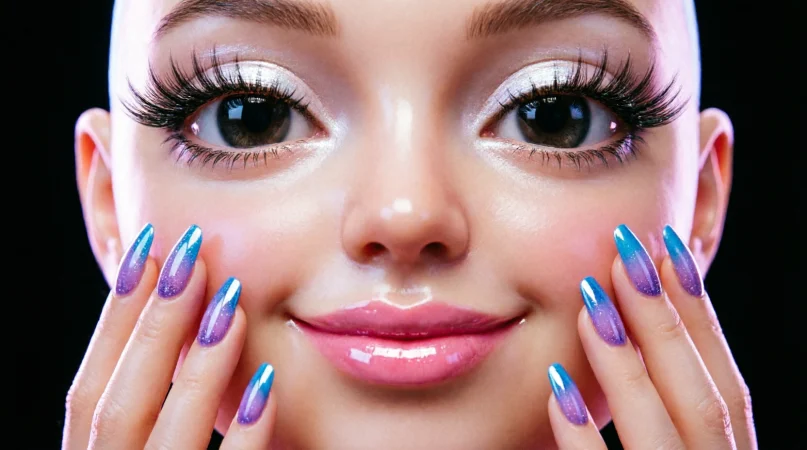
The emoji with nails and lashes💅 usually represents nail care, beauty, confidence, sass, or nonchalance. Someone may use it when talking about getting their nails done, looking good, making a confident statement, or brushing off something as if it does not matter.
If you are searching for the emoji with nails and lashes, you are most likely referring to 💅, officially called Nail Polish. It shows a hand with painted fingernails and is often used to represent manicures, beauty, self-care, confidence, sass, or a casual “whatever” attitude.
Its meaning can be literal or expressive depending on the conversation. Unicode lists 💅 as Nail Polish, with the code point U+1F485. The emoji was approved in Unicode 6.0 in 2010 and later added to Emoji 1.0.
What Is the Emoji With Nails and Lashes?
The emoji people sometimes describe as the “emoji with nails and lashes” is generally 💅 Nail Polish. It does not officially represent eyelashes or a face. Instead, it depicts a hand with polished nails.
The “lashes” part of the description may come from the glamorous or feminine appearance people associate with the emoji. Its visual design can also vary between platforms, so the exact hand position, skin tone, nail color, and polish style may look slightly different.
Unicode identifies the basic character as Nail Polish, while skin-tone versions can be created by combining it with a skin-tone modifier, such as 💅🏻, 💅🏼, 💅🏽, 💅🏾, or 💅🏿.
💅 Nail Polish Emoji Meaning in Text
In texting, 💅 can carry several meanings depending on what comes before and after it.
1. Getting nails done
The most literal use is related to manicures, nail polish, beauty appointments, or self-care.
Example:
“Manicure appointment tomorrow 💅”
The emoji reinforces the beauty or nail-care topic.
2. Confidence
💅 can add a confident tone to a statement.
“I know I looked good tonight 💅”
Here, it is not necessarily talking about nails. The hand gesture adds a sense of self-assurance.
3. Sass or attitude
The emoji can make a statement sound playful, bold, or slightly sassy.
“I said what I said 💅”
The message suggests confidence and a willingness to stand by what was said.
4. Unbothered or nonchalant
Sometimes 💅 communicates an attitude similar to “I don’t care” or “I’m not worried about it.”
“They didn’t like my decision. Oh well 💅”
In this context, the emoji helps convey a relaxed, unbothered reaction.
5. Glamour or looking good
The emoji may accompany a comment about an outfit, makeup, hair, nails, or overall appearance.
“New outfit for tonight 💅✨”
The combination gives the message a polished, glamorous feel.
Is 💅 a Flirty Emoji?
It can appear in a flirty conversation, but 💅 does not automatically mean flirting.
For example:
“You really think I look good? 💅”
could sound playful or teasing. However, the same emoji in:
“My nails are finally done 💅”
is simply about beauty or self-care.
The relationship between the people, the rest of the message, and their usual communication style matter more than the emoji alone. Avoid treating 💅 as proof of romantic interest.
Can 💅 Be Sarcastic?
Yes. The emoji can contribute to a sarcastic or teasing tone.
Consider:
“Wow, what an amazing idea 💅”
Depending on the conversation, the emoji may make the sentence sound deliberately dramatic or tongue-in-cheek.
However, 💅 itself does not have one fixed sarcastic meaning. The surrounding words determine whether the message feels sincere, playful, dismissive, or sarcastic.
Is 💅 Rude?
Usually, 💅 is not inherently rude. It can make a message feel confident, playful, dramatic, or slightly dismissive.
Still, context matters.
Compare:
“Take your time 💅”
with:
“I don’t need your approval 💅”
The first might be playful. The second can sound more defiant.
If you are unsure how someone intended it, look at the complete message rather than interpreting the emoji by itself.
💅 in Different Situations
Beauty and self-care
“Spa day and fresh nails 💅”
This is a straightforward beauty-related use.
Confidence
“I passed the interview 💅”
The emoji can add a celebratory, self-assured tone.
Friendship
“Girl, you looked amazing tonight 💅”
Here, it can add enthusiasm and style without necessarily being romantic.
Humor
“Me pretending I didn’t see that text 💅”
The emoji makes the situation feel exaggerated and playful.
Dismissive attitude
“That’s their problem, not mine 💅”
In this case, it can emphasize an unbothered attitude.
Examples of 💅 in Text Messages
| Message | Likely Meaning | Why Context Matters |
|---|---|---|
| “Fresh manicure 💅” | Beauty or nail care | The words directly mention nails. |
| “I look good today 💅” | Confidence | The emoji adds self-assurance. |
| “I said what I said 💅” | Sass or confidence | It reinforces a bold statement. |
| “Whatever happens, happens 💅” | Unbothered attitude | The emoji makes the reaction feel casual. |
| “You actually remembered? 💅” | Playful teasing | The tone could be affectionate or sarcastic depending on the conversation. |
| “New dress, new energy 💅✨” | Glamour and confidence | The combination creates a polished, celebratory tone. |
Emojis Similar to 💅 and How They Differ
| Emoji | Official Name | Common Meaning | Tone | Where or When It Is Used |
|---|---|---|---|---|
| 💅 | Nail Polish | Beauty, confidence, sass, nonchalance | Playful, confident | Beauty posts, jokes, confident comments, casual texts |
| 💄 | Lipstick | Makeup, beauty, getting ready | Glamorous, playful | Makeup, fashion, beauty conversations |
| 💋 | Kiss Mark | Kissing, affection, flirtation | Affectionate, flirty | Romantic or playful messages |
| 👑 | Crown | Confidence, achievement, royalty | Proud, celebratory | Compliments, achievements, playful praise |
| ✨ | Sparkles | Excitement, emphasis, glamour | Positive, expressive | Celebrations, compliments, aesthetic messages |
| 😌 | Relieved Face | Calmness, satisfaction, contentment | Relaxed, peaceful | Calm reactions or satisfied statements |
| 🙄 | Face with Rolling Eyes | Annoyance, disbelief, sarcasm | Sarcastic, irritated | Reactions to frustrating or silly comments |
| 😏 | Smirking Face | Self-confidence, teasing, suggestiveness | Teasing, sometimes flirty | Jokes, teasing, flirtatious contexts |
The closest match depends on what you want to communicate. 💅 is more about confidence, beauty, sass, or being unbothered. 💄 is more directly connected to makeup, while 💋 can carry a stronger romantic or affectionate meaning.
If your goal is calm confidence, 😌 may fit better. For obvious eye-rolling or annoyance, 🙄 is clearer. Meanwhile, 😏 can create a more suggestive or teasing tone than 💅.
Does the Skin Tone Change the Meaning?
No. Skin-tone variations generally change the appearance of the hand rather than creating a completely different emotional meaning.
Unicode supports skin-tone modifier sequences for 💅, including:
💅🏻 💅🏼 💅🏽 💅🏾 💅🏿
These are recognized as combinations of Nail Polish and the corresponding skin-tone modifier.
The choice is mainly about representation and visual preference. The broader conversational meaning remains tied to the Nail Polish emoji.
Why Does 💅 Sometimes Feel Like “Whatever”?
The emoji’s visual pose can suggest a casual, self-assured gesture. Over time, its use has expanded beyond the literal act of painting nails.
That is why a message such as:
“Not my problem 💅”
can communicate more than beauty. It may suggest:
- “I’m not bothered.”
- “I’m confident about my choice.”
- “I’m moving on.”
- “I’m standing by what I said.”
These are contextual interpretations rather than separate official meanings assigned to the emoji.
Is the 💅 Emoji About Beauty Only?
No. Beauty and manicure-related uses are literal, but the emoji can also work as a conversational tone marker.
It may communicate confidence, sass, exaggeration, or nonchalance without saying anything about nails. Emojipedia notes that the emoji is used both literally for beauty and self-care and figuratively for confidence, sass, and nonchalance.
How to Respond to 💅
Your response should depend on the message attached to it.
If someone says:
“I finally got my nails done 💅”
you could reply:
“They look amazing!”
If they say:
“I said what I said 💅”
a playful response might be:
“Okay, confidence 😂”
For a more neutral situation, simply respond to the actual message rather than assigning a deeper meaning to the emoji.
Common Misunderstandings About 💅
“It always means flirting.”
Not necessarily. 💅 can be used in completely non-romantic conversations.
“It always means someone is being rude.”
No. It can be playful, confident, glamorous, literal, or mildly dismissive depending on context.
“The official meaning is confidence.”
The official Unicode name is Nail Polish. Meanings such as confidence, sass, and nonchalance are common uses and interpretations rather than the character’s formal name.
“The emoji officially means eyelashes.”
It does not. The official Unicode name is Nail Polish, and the character represents a hand associated with nail care.
Official 💅 Emoji Details
The basic emoji is:
💅 Nail Polish
- Unicode code point: U+1F485
- Unicode name: Nail Polish
- Unicode version: 6.0
- Emoji version: 1.0
- Category: Activities
- Related keywords: manicure, nail, polish, cosmetics, care
Unicode’s emoji data places 💅 under hand-related symbols and lists keywords including care, cosmetics, manicure, nail, and polish.
The emoji can look different across operating systems and vendors. For example, Google has published different versions of its Noto Color Emoji artwork over time, so the exact visual design should not be treated as part of the emoji’s fixed meaning.
Frequently Asked Questions
What is the official name of the emoji with nails and lashes?
The official Unicode name is Nail Polish (💅). “Emoji with nails and lashes” is an informal way someone might describe its appearance or aesthetic, not its official name.
What does 💅 mean from someone?
It can mean nail care, beauty, confidence, sass, or an unbothered attitude. The surrounding message is needed to determine which interpretation makes the most sense.
Is 💅 a feminine emoji?
The emoji depicts a hand with polished nails, but its meaning is not limited to one gender. People can use it literally or as a stylistic expression of confidence, humor, or sass.
Does 💅 mean “I don’t care”?
Sometimes. In a sentence such as “They can think whatever they want 💅,” it can reinforce a nonchalant or unbothered attitude. That interpretation depends on context.
What is the difference between 💅 and 💄?
💅 represents Nail Polish and is directly connected to manicures and polished nails. 💄 is Lipstick and is more directly associated with makeup and cosmetics.
Can 💅 mean confidence?
Yes. Confidence is a common informal use, especially when the emoji accompanies a bold, proud, or self-assured statement.
Conclusion
The 💅 Nail Polish emoji is more versatile than its literal appearance suggests. It can represent manicures and beauty, but it can also add confidence, sass, glamour, humor, or an unbothered attitude to a message. The safest way to understand it is to consider the words around it and the tone of the conversation rather than assuming one fixed meaning.

Michael Anderson is a content writer at EmojissLife.com, where he creates fun, relatable, and easy-to-read emoji guides, meanings and creative ideas. He enjoys turning everyday conversations into expressive content that helps readers find the perfect emojis for every mood and moment.
1 thought on “💅 Nail Polish Emoji Meaning: The Real Meaning Behind This Gesture for 2026”