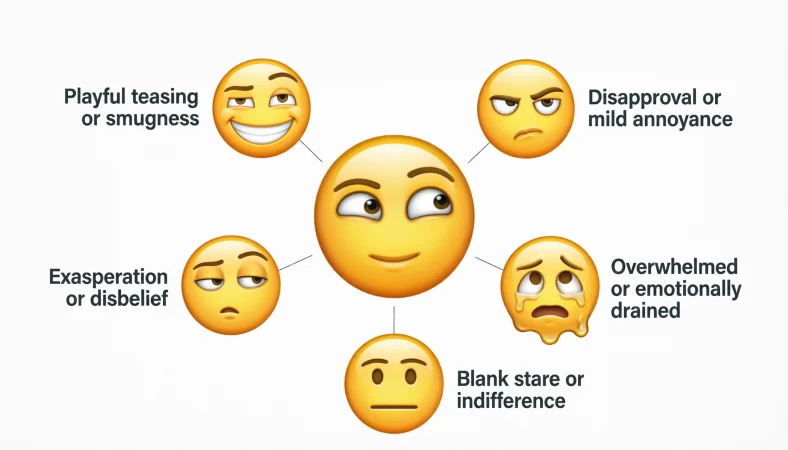
🙄 (Face with Rolling Eyes) usually means “Seriously?”, “I don’t believe that,” or “Here we go again.” It often conveys sarcasm, mild irritation, boredom, or exasperation. Whether it feels funny or offensive depends on the relationship between the people chatting and the surrounding message.
Ever received the side eye emoji 👀 and immediately wondered, “Wait… what are they trying to say?” You are not alone. The Emoji Side Eye is commonly used to show suspicion, curiosity, disbelief, awkwardness, playful judgment, or interest in something happening. Its meaning can change depending on the conversation, the relationship between two people, and the tone of the message. In texting and on social media, 👀 often adds a reaction that words alone cannot fully express.
This guide explains the different meanings of the side eye emoji, how people use it in messages, and what it can mean from a friend, crush, or social media user. With clear examples and real-world context, you can better understand whether 👀 means “I saw that,” “Tell me more,” or simply “Hmm… that looks suspicious!”
What Does the Side-Eye Emoji Mean?
Although many people refer to 🙄 as the “side-eye emoji,” its official Unicode name is Face with Rolling Eyes. The upward eye movement creates a similar feeling to giving someone a side glance, which is why people often use the nickname “side eye.”
In everyday conversations, this emoji can express:
- Doubt or disbelief
- Sarcastic humor
- Mild annoyance
- Frustration with repetitive behavior
- Impatience
- Feeling unimpressed
It doesn’t always signal anger. In many chats, it’s simply a playful reaction to something silly or predictable.
Common Examples
Message:
“You forgot your keys again? 🙄”
Likely meaning:
The sender is teasing someone for making the same mistake again rather than expressing serious anger.
Message:
“Sure… because that totally happened. 🙄”
Likely meaning:
The emoji suggests skepticism or disbelief.
Message:
“Monday morning meetings 🙄”
Likely meaning:
It expresses annoyance or exhaustion about something routine.
How Context Changes the Meaning
The same emoji can feel very different depending on who sends it.
Friendly Conversations
Among friends, 🙄 often means:
- “You’re being ridiculous.”
- “I can’t believe you.”
- Lighthearted teasing.
It usually isn’t meant to hurt feelings.
Serious Conversations
In an argument or sensitive discussion, the emoji may suggest:
- Dismissing someone’s opinion
- Impatience
- Disrespect
- Lack of interest in continuing the conversation
Because tone is harder to read in text messages, it’s easy for this emoji to be misunderstood.
Is the Side-Eye Emoji Sarcastic?
Often, yes.
🙄 is one of the most common emojis used to signal sarcasm or irony. It can soften a sarcastic comment between friends or make a skeptical reply feel more expressive.
For example:
“Oh sure… that sounds believable. 🙄”
The words alone might seem neutral, but the emoji clearly changes the tone.
Can the Side-Eye Emoji Be Rude?
It can.
The emoji isn’t automatically rude, but it may feel dismissive if:
- Someone uses it during a disagreement.
- It appears without any explanation.
- The relationship between the people isn’t very close.
If you’re unsure how someone will interpret it, adding a friendly sentence or another emoji can help avoid confusion.
Emoji Side Eye Compared With Similar Emojis
| Emoji | Official Name | Common Meaning | Tone | Where or When It Is Used |
| 🙄 | Face with Rolling Eyes | Skepticism, annoyance, sarcasm | Playful to dismissive | Reacting to unbelievable, repetitive, or frustrating situations |
| 😒 | Unamused Face | Feeling unimpressed or dissatisfied | Cold, annoyed | When someone isn’t impressed or is quietly irritated |
| 🤨 | Face with Raised Eyebrow | Questioning or doubting something | Curious, skeptical | Asking for clarification or expressing suspicion |
| 😑 | Expressionless Face | No emotional reaction or boredom | Flat, neutral | Showing indifference or emotional exhaustion |
| 😬 | Grimacing Face | Awkwardness or discomfort | Nervous, uneasy | Responding to embarrassing moments or mistakes |
| 🙃 | Upside-Down Face | Playful sarcasm or irony | Silly, ironic | Joking or reacting to absurd situations |
| 😐 | Neutral Face | Little or no emotion | Calm, reserved | Staying neutral or avoiding a strong reaction |
Key Differences
The biggest confusion is between 🙄, 🤨, and 😒.
- 🙄 Face with Rolling Eyes usually expresses “I’m over this” or “Seriously?”
- 🤨 Face with Raised Eyebrow is more about questioning or doubting something without obvious annoyance.
- 😒 Unamused Face often feels more serious and less playful than 🙄.
- 🙃 Upside-Down Face usually signals humorous sarcasm rather than frustration.
Choosing the right emoji depends on how strong or playful you want your reaction to sound.
How to Respond to the Side-Eye Emoji
A good response depends on the conversation.
If someone is joking:
- “😂 Fair enough.”
- “Okay, you got me.”
- “I deserved that.”
If they seem skeptical:
- “I promise I’m serious.”
- “Let me explain.”
- “I know it sounds unbelievable.”
If the conversation feels tense:
- “I think we’re misunderstanding each other.”
- “Can you tell me what bothered you?”
Matching the tone usually works better than assuming the emoji has a negative meaning.
Copy and Paste
Side-eye emoji:
🙄
You can copy and paste it into text messages, emails, comments, or social media posts whenever you want to express sarcasm, disbelief, mild annoyance, or playful exasperation.
Official Emoji Information
- Official Unicode Name: Face with Rolling Eyes
- Emoji Character: 🙄
- Unicode Version: Unicode 8.0
- First Approved: 2015
The artwork may look slightly different on Apple, Google, Samsung, and other devices, but the intended meaning remains the same.
Frequently Asked Questions
Is the side-eye emoji the same as 🙄?
In everyday language, yes. People often call 🙄 the “side-eye emoji,” even though its official Unicode name is Face with Rolling Eyes.
Does the side-eye emoji always mean sarcasm?
No. It commonly expresses sarcasm, but it can also show annoyance, disbelief, boredom, or playful teasing depending on the context.
Can the side-eye emoji be friendly?
Yes. Between friends or family, it’s often used as a humorous reaction rather than an insult.
Why do people misunderstand the side-eye emoji?
Text messages don’t include facial expressions or tone of voice. The same emoji can seem playful to one person and dismissive to another.
Is 🙄 stronger than 😒?
Usually, yes. 🙄 often feels more openly sarcastic or exasperated, while 😒 tends to express quiet disappointment or annoyance.
Conclusion
The emoji side eye, commonly represented by 🙄 Face with Rolling Eyes, is a versatile reaction that usually conveys skepticism, annoyance, or playful sarcasm. Its exact meaning depends on the surrounding words, the relationship between the people chatting, and the overall tone of the conversation. Rather than assuming it always signals frustration or disrespect, it’s best to read it alongside the rest of the message.

Olivia Brown is a content writer at EmojissLife.com, where she creates fun, engaging, and easy-to-read emoji guides, meanings and collections. She enjoys turning everyday expressions into creative content that helps readers find the perfect emoji for every moment.