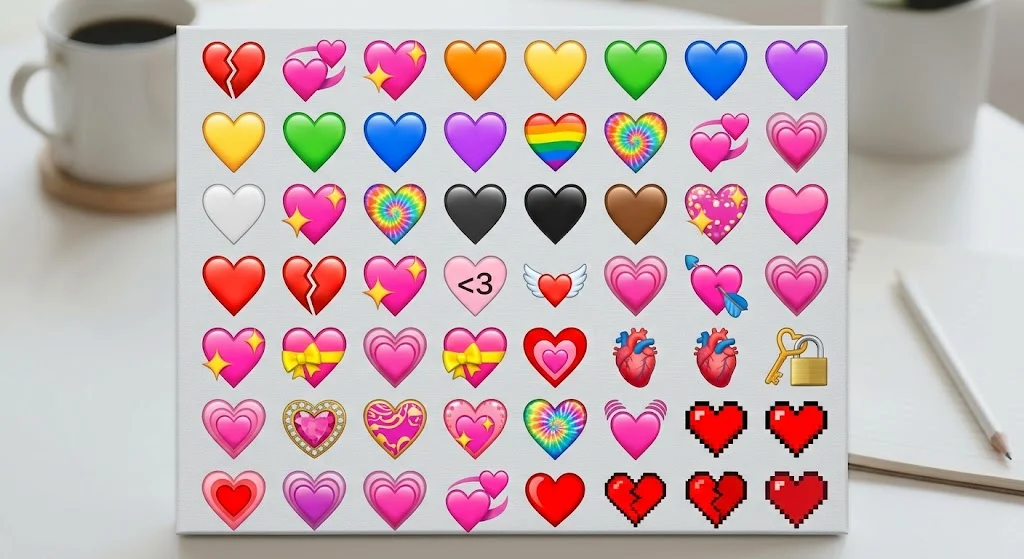
Heart colors can change the feeling of a message, even when the basic idea is affection. The following explanations cover common texting interpretations, including when a heart may feel romantic, friendly, supportive, or simply decorative.
Different heart emojis can express love, friendship, gratitude, support, affection, and many other feelings. ❤️ The red heart usually represents love and deep affection, while 💛 often suggests friendship or happiness, 💙 can express trust or support, and 🖤 may communicate dark humor, grief, or a particular aesthetic. Pink hearts often feel tender or sweet, while 💚 can relate to nature, health, or personal associations.
There is no universal code that gives every heart emoji one fixed meaning. The color, relationship, conversation, and sender’s usual style all matter. A heart from a close friend may express appreciation, while the same heart from a romantic partner may feel affectionate or intimate.
What Each Heart Emoji Meaning
Heart colors can change the feeling of a message, even when the basic idea is affection. The following explanations cover common texting interpretations, including when a heart may feel romantic, friendly, supportive, or simply decorative.
❤️ Red Heart: Love and Deep Affection
❤️
Official name: Red Heart
Love and affection
The ❤️ red heart is one of the clearest ways to express love, care, and strong affection. It can be romantic, but it is not limited to romantic relationships.
People use it to show love for a partner, appreciation for a family member, or support for a close friend. It can also express enthusiasm for a favorite song, food, place, or experience.
Examples:
“I love you so much ❤️” — Expresses direct affection, often romantic or deeply personal.
“Thank you for always being there for me ❤️” — Shows gratitude and emotional warmth.
“That dress looks amazing ❤️” — Adds enthusiasm and appreciation to a compliment.
Is ❤️ romantic? It can be, especially in an affectionate conversation between partners or people who are dating. Between friends and family, it often communicates care without romantic interest.
The words and relationship provide the meaning. A red heart alone does not prove that someone is in love or wants a relationship.
🩷 Pink Heart: Sweetness and Tender Affection
🩷
Official name: Pink Heart
Tender and affectionate
The 🩷 pink heart often feels sweet, gentle, caring, or playful. It can express affection without the strong romantic feeling that some people associate with a red heart.
It works well in messages between friends, family members, partners, and people sharing a warm moment.
Examples:
“You are the sweetest person ever 🩷” — Adds tenderness and appreciation.
“Hope your day goes well 🩷” — Makes a friendly wish feel warm and caring.
“Miss you already 🩷” — Can express affection or romantic longing, depending on the relationship.
Pink hearts can also be used for cute or decorative messages. Their meaning is not restricted to romance, femininity, or any particular group of people.
🧡 Orange Heart: Warmth, Care, and Encouragement
🧡
Official name: Orange Heart
Warm and friendly
The 🧡 orange heart commonly conveys warmth, care, encouragement, and friendly affection. Some people choose it when they want to express support or closeness without making the message feel strongly romantic.
It may also be used because orange is someone’s favorite color or because it matches an autumn theme, a sports team, or a particular design.
Examples:
“You have got this! 🧡” — Offers encouragement and support.
“So glad we became friends 🧡” — Expresses warm friendship.
“Pumpkin season is here 🧡🍂” — Uses the heart as part of an autumn-themed message.
An orange heart is not automatically a sign of friendship or a way to reject romance. It can be affectionate in a romantic relationship, too.
💛 Yellow Heart: Friendship and Happiness
💛
Official name: Yellow Heart
Friendly and cheerful
The 💛 yellow heart often expresses happiness, friendship, positivity, and caring feelings. Its bright color can make a message feel cheerful and welcoming.
It is a natural choice for celebrating a friend’s success, thanking someone, or sending a positive reaction.
Examples:
“So proud of you! 💛” — Shows encouragement and happiness for another person.
“Thanks for making my day better 💛” — Expresses gratitude and warmth.
“Best friends forever 💛” — Emphasizes a close friendship.
Some people associate yellow hearts with romantic relationships or personal memories. Others use them simply because they like the color.
Red vs. yellow heart: ❤️ often communicates intense affection or love, while 💛 frequently feels cheerful and friendly. However, either one can be used between friends or romantic partners.
💚 Green Heart: Nature, Growth, and Support
💚
Official name: Green Heart
Nature and caring
The 💚 green heart is commonly associated with nature, plants, environmental interests, health, and growth. In personal messages, it can also express affection, encouragement, or emotional support.
Its meaning depends particularly on the subject of the conversation.
Examples:
“My little garden is finally growing 💚🌱” — Connects the heart with plants and nature.
“Sending you love and strength 💚” — Offers support and caring feelings.
“We did it! 💚” — Celebrates an achievement with a personal or team-related color.
Green hearts can also carry personal or cultural associations. In some conversations, they may be used in connection with environmental causes, a favorite team, or a shared interest.
A green heart does not automatically indicate jealousy, even though green is sometimes associated with that emotion in expressions such as “green with envy.”
💙 Blue Heart: Trust, Loyalty, and Support
💙
Official name: Blue Heart
Trust and support
The 💙 blue heart often expresses trust, loyalty, care, and support. Its color can make the message feel calm or steady, although these associations are informal.
It can be used between friends, relatives, partners, and people who want to show solidarity.
Examples:
“I am always here for you 💙” — Expresses support and reassurance.
“Thank you for being such a loyal friend 💙” — Shows appreciation and trust.
“Sending love to everyone affected 💙” — Can express sympathy or solidarity.
A blue heart can also represent someone’s favorite color or an association with a team or cause.
Does a blue heart mean friendship instead of love? Not necessarily. It can express romantic affection, but the color alone does not establish whether a message is romantic or platonic.
🩵 Light Blue Heart: Gentle Care and Calm Affection
🩵
Official name: Light Blue Heart
Gentle and calm
The 🩵 light blue heart often feels soft, peaceful, caring, or reassuring. It can be used when someone wants to express affection in a gentle, understated way.
Examples:
“Hope everything works out for you 🩵” — Offers quiet encouragement.
“That was such a thoughtful thing to do 🩵” — Shows gentle appreciation.
“A little reminder to take care of yourself 🩵” — Adds a calm and caring tone.
Light blue may also represent a favorite color, a personal symbol, or a color theme. Its meaning is not fixed, and it is not automatically less affectionate than a darker blue heart.
💜 Purple Heart: Affection, Admiration, and Compassion
💜
Official name: Purple Heart
Affectionate and expressive
The 💜 purple heart can express affection, admiration, compassion, and appreciation. It is also used in decorative messages and conversations connected to purple-themed interests.
Examples:
“You inspire me every day 💜” — Shows admiration and appreciation.
“Sending you lots of love 💜” — Communicates care and affection.
“That concert was unforgettable 💜” — Expresses enthusiasm about an experience.
In some communities, a purple heart may have a particular shared meaning. It is best understood through the context rather than assuming that it always represents a specific relationship or feeling.
🤎 Brown Heart: Warmth, Comfort, and Earthiness
🤎
Official name: Brown Heart
Warm and comforting
The 🤎 brown heart often conveys warmth, comfort, closeness, or a connection to earthy colors. It can appear in messages about coffee, chocolate, fall scenery, or nature.
It may also be used to express solidarity or personal and cultural identity, depending on the context.
Examples:
“Coffee and a quiet morning 🤎☕” — Creates a cozy, relaxed feeling.
“Sending you a big hug 🤎” — Expresses warmth and affection.
“Love this autumn outfit 🤎🍂” — Matches a color or style theme.
A brown heart can be romantic, friendly, or purely decorative. Its color does not determine the sender’s intention.
🖤 Black Heart: Dark Humor, Grief, and Strong Feelings
🖤
Official name: Black Heart
Context-dependent
The 🖤 black heart has several distinct uses. It can express dark humor, sadness, grief, emotional intensity, or an interest in a dark or alternative aesthetic.
It may also be used affectionately, especially by people who prefer black hearts to brighter colors.
Examples:
“That joke was so wrong 😂🖤” — Combines humor with a dark or sarcastic tone.
“Missing you today 🖤” — Can communicate sadness or remembrance.
“Black outfit, black coffee, black heart 🖤” — Uses the symbol as part of a style or aesthetic.
The black heart does not always mean hatred, sadness, or a lack of affection. A message such as “Love you 🖤” can be genuinely warm and affectionate.
🩶 Grey Heart: Neutral Affection and Quiet Support
🩶
Official name: Grey Heart
Subtle and understated
The 🩶 grey heart can convey quiet affection, sympathy, support, or a more neutral emotional tone. It may feel understated compared with brighter hearts.
Examples:
“Thinking of you today 🩶” — Offers gentle support.
“Thank you for understanding 🩶” — Shows appreciation in a calm way.
“Keeping things simple today 🩶” — Uses the color as part of a muted aesthetic.
Grey hearts can be used for many personal reasons, including color preferences or a particular visual style. They do not automatically suggest emotional distance or a lack of love.
🤍 White Heart: Pure Affection, Peace, and Remembrance
🤍
Official name: White Heart
Gentle and sincere
The 🤍 white heart is commonly associated with sincere affection, peace, care, and gentle support. It can also appear in messages of remembrance or sympathy.
Examples:
“You will always be in my heart 🤍” — Expresses deep affection or remembrance.
“Sending you peace and comfort 🤍” — Offers sympathy or support.
“A simple, beautiful day 🤍” — Adds a soft decorative touch.
White hearts may feel calm or understated, but they can carry deep emotion. The color alone does not mean that a relationship is pure, innocent, or non-romantic.
How to Choose the Right Heart Emoji
The best heart depends on the feeling you want to express, not on a strict color code.
Here is a simple way to choose:
For direct love or strong affection, red ❤️ is a familiar choice.
For a sweet, gentle message, consider 🩷 or white 🤍.
For friendship and cheerful appreciation, yellow 💛 or orange 🧡 may fit.
For reassurance and loyalty, blue 💙 or 🩵 can communicate support.
For nature, growth, or environmental topics, green 💚 is a natural fit.
For admiration or expressive affection, purple 💜 can work well.
For cozy feelings or earthy themes, 🤎 may suit the message.
For dark humor, grief, or a black-themed aesthetic, 🖤 can fit.
For quiet, understated support, 🩶 is an option.
These are suggestions, not rules. A person may use a red heart for a friend or a black heart for a romantic partner. Personal habits and shared meanings can matter more than the color itself.
How to Interpret a Heart Emoji in a Text Message
When someone sends you a heart, the surrounding conversation is usually more useful than the color alone.
Look at the words around it
Compare these messages:
“Thanks for helping me ❤️”
“Love you ❤️”
The first expresses appreciation, while the second communicates direct affection. The same emoji adds warmth to both messages, but the words establish the main meaning.
Consider your relationship
A heart from a family member, close friend, coworker, or romantic partner can carry different meanings.
A friend sending 💛 after good news may be celebrating with you. A partner sending the same heart may be expressing affection or sharing a personal habit.
Neither interpretation is guaranteed by the color.
Notice the sender’s usual style
Some people use hearts in nearly every friendly message. Others reserve them for moments of affection or emotional support.
If someone regularly uses ❤️, 🩷, or 💙 with friends, receiving one is less likely to signal a sudden change in their feelings.
A single emoji is not enough to establish romantic interest, rejection, jealousy, or any other hidden intention.
Frequently Asked Questions
Which heart emoji means true love?
The ❤️ red heart is commonly associated with love and deep affection. It is often used in romantic messages, but it can also express love for family members, friends, and other important people.
No emoji can independently confirm that someone’s feelings are genuine. The meaning comes from the message and relationship.
Which heart emoji means friendship?
The 💛 yellow heart is often associated with friendship, happiness, and cheerful affection. The 🧡 orange heart and 💙 blue heart are also used to express friendly warmth, care, and support.
There is no official heart color reserved only for friendship.
What does it mean when someone sends a pink heart instead of a red heart?
A 🩷 pink heart may feel softer, sweeter, or more playful than a ❤️ red heart. Some people use it for gentle affection, while others choose it simply because they prefer the color.
It does not automatically mean that the sender has weaker feelings or is avoiding romance.
Are different heart colors romantic?
Any heart color can be used romantically. Red and pink are commonly associated with love and affection, but blue, purple, orange, white, and even black hearts can appear in romantic messages.
The sender’s words, relationship, and communication style provide more information than the color by itself.
What does it mean when someone sends two different hearts together?
Two hearts may combine colors, emphasize affection, or match a personal or decorative style.
For example, ❤️🩷 could express love and tenderness, while 💙🤍 might be used for a calm, supportive message. These combinations have no universal meanings, so context still matters.
Conclusion
Different heart emojis offer flexible ways to express love, friendship, gratitude, sympathy, and support. Red often communicates deep affection, yellow commonly feels friendly, blue can suggest trust, and black or white hearts may carry more personal or context-dependent meanings.
The most reliable way to understand a heart is to consider the words, relationship, and sender’s usual style. Heart colors can add emotional detail, but they do not establish someone’s feelings on their own.

Michael Anderson is a content writer at EmojissLife.com, where he creates fun, relatable, and easy-to-read emoji guides, meanings and creative ideas. He enjoys turning everyday conversations into expressive content that helps readers find the perfect emojis for every mood and moment.